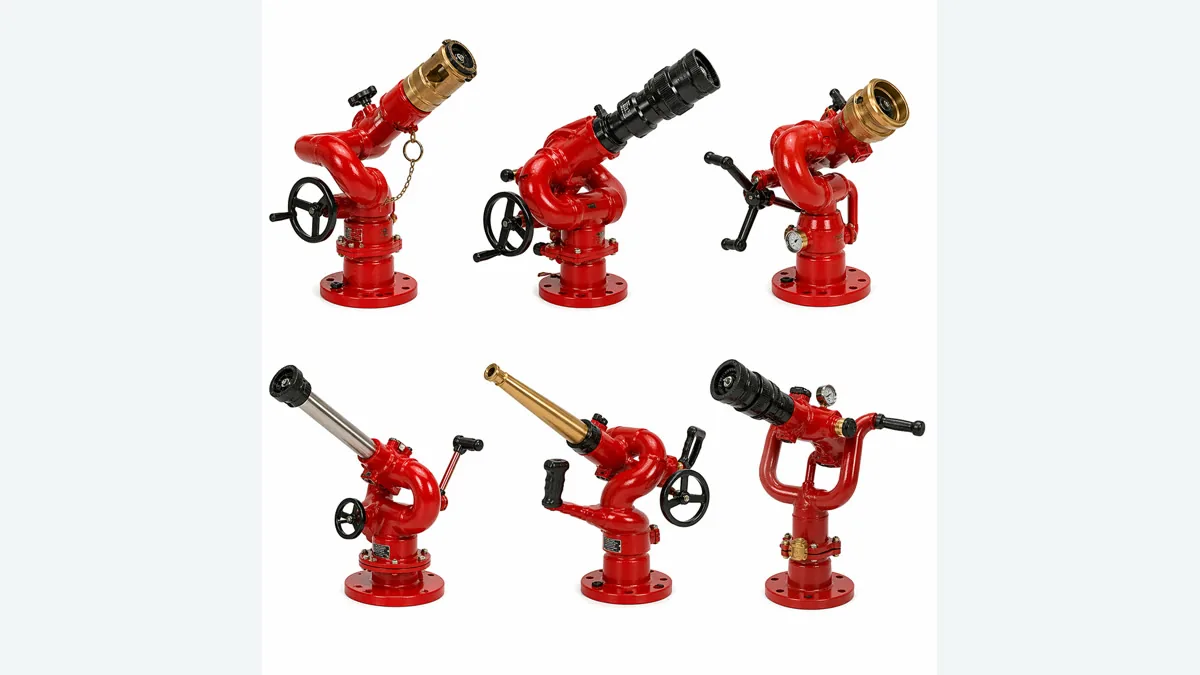
A monitor is bought as a nozzle and installed as a flange. Bolt-circle diameter, hole count, facing, and the material certificate behind them decide whether the unit lands on the pedestal that is already cast — and none of that is settled by the flow rate.
This checklist specifies the base flange interface alongside the duty, and sets out the drawings and certificates to hold before release.
Direct answer: Specify the base flange interface — bolt-circle diameter, hole count, facing, and gasket arrangement — in the same document as the duty, and approve only against a material certificate matching the grade and corrosion class you named.
Define the fire monitor installation duty
Compare Define the fire monitor installation duty for fire monitor base against one RFQ revision. Each row should identify the requirement, approval evidence, and buyer action before production.
| Requirement | Factory control | Evidence to verify | Order risk | RFQ follow-up |
|---|---|---|---|---|
| Sample approval | Supplier submits first-article monitor with base flange for fit and function check. | Inspect flange bolt pattern, gasket seating, and monitor rotation against approved drawing. | Unapproved sample may cause installation rework and delay project schedule. | Request sample per RFQ and approve only after dimensional and functional sign-off. |
| Material / substrate | Mill certificate confirms flange grade; supplier records heat number and traceability. | Cross-check certificate against specified material standard (e.g., applicable market compliance evidence, 316 SS). | Substituted material can lead to corrosion failure or flange cracking under pressure. | Verify material cert before production release and retain copy with PO. |
| Width or size tolerance | Flange O.D., bolt-circle diameter, and thickness measured per ISO the buyer-confirmed requirement or drawing. | Use caliper or CMM report; tolerance must match the buyer-approved tolerance or as specified. | Oversized/undersized flange causes bolt misalignment and monitor mounting failure. | Request dimensional inspection report with each lot and compare to RFQ limits. |
| Finish or color control | Surface finish per SSPC-SP6 or specified Ra; coating color verified against RAL chip. | Visual compare under buyer-approved viewing conditions; dry-film thickness gauge for paint uniformity. | Poor finish accelerates corrosion; color mismatch leads to site rejection. | Approve finish sample and request coating thickness report before shipment. |
| Packing format | Flanges individually wrapped, bolted to pallet, with edge protectors and moisture barrier. | Check packing list, photo of loaded container, and seal integrity on arrival. | Improper packing causes transit damage, thread galling, or gasket contamination. | Specify packing standard in RFQ and request pre-shipment photos for approval. |
For fire monitor base, use Define the fire monitor installation duty as the decision scope. Read the rows as one approval sequence. Start with sample approval; use the risk and buyer-action columns to decide whether its evidence is sufficient. Verify it with the inspection method and approval evidence recorded in the table.
For this fire monitor base sourcing record, keep the supplier response, marked sample, and approval owner under the same revision number. If any proof conflicts with the approved record, hold the quote, sample, or production release until the supplier explains the deviation in writing. Before closing the checkpoint, reconcile the latest drawing, sample, quotation, and approval comments, identify which record controls if they disagree, and document the resolution. Carry the signed Define the fire monitor installation duty table into the purchase order and production handoff so the same checks support quote comparison, sample approval, shipment release, and later reorders.
Specify the base flange interface
- Supplier cannot produce the base flange to the specified bolt-circle diameter and hole count. Mismatched flange dimensions cause field-installation failure, voiding the monitor's warranty and delaying project handover. Compare the supplier's standard flange drawing against your quote request's bolt-circle diameter, hole count, and bolt size before shortlisting. A dimensioned flange drawing with the bolt-circle diameter, hole count, and bolt-hole size called out. Approve the drawing only after a physical sample is measured against the quote request specification.
- Supplier has no documented QC process for verifying flange flatness and gasket surface finish. An uneven flange face leads to gasket leaks under pressure, causing monitor drift and unplanned maintenance. Check whether the supplier includes a flatness gauge check and surface-roughness measurement in their standard QC workflow. A QC record or in-process inspection sheet showing flatness tolerance and surface finish values for a recent flange run. Require a first-article inspection report for the base flange before approving the sample.
- Supplier's quoted MOQ for the base flange exceeds your project's required quantity without a clear break-point. You pay for unused inventory or face a per-unit price spike on a smaller order, inflating the total procurement cost. Ask the supplier to confirm the MOQ in units, not lots, and whether partial shipments are allowed for building commercial fire protection solutions. A written MOQ confirmation on the supplier's letterhead, including the unit price at your required quantity. Shortlist only suppliers whose MOQ aligns with your project quantity or who offer a tiered pricing schedule.
- Supplier cannot provide a material test certificate for the flange forging or casting batch. Without a material certificate, you cannot verify the flange's pressure rating or corrosion resistance, risking a field failure. Document the required material grade (e.g., stainless steel 316 or ductile iron) in the quote request and request the mill test report. A material test certificate (EN 10204 3.1 or equivalent) from the foundry or forging supplier. Approve the supplier only after the material certificate matches the quote request's specified grade and standard.
quote request checkpoint
Verify material and corrosion requirements
For fire monitor base flange control, the decision rule is: only approve suppliers that provide a material certificate matching the specified grade and corrosion resistance class. This threshold prevents field failures due to galvanic corrosion or coating breakdown.
Match body and fastener materials
Ensure the base flange body and fastener materials are compatible. For example, stainless steel body with stainless steel fasteners avoids galvanic corrosion. The checklist:
- Confirm body material grade (e.g., 316 stainless steel).
- Verify fastener material matches body.
- Request material test reports (MTR) from the supplier.
Define coating and environment exposure
Specify coating type (e.g., epoxy, galvanized) and required thickness. For outdoor or corrosive environments, require salt spray test results per applicable market compliance evidence. The checklist:
- Define coating standard and thickness.
- Require coating thickness measurement on sample.
- Request environmental exposure data from previous installations.
mismatched materials increase rework cost. Production risk: non-compliant coatings lead to rejection. Factory execution: demand in-process inspection of coating. quote request/sample handoff: include material and coating specs in the quote request and verify on first article. For compatible fire monitor base flanges, see our fire sprinklers alarm valves products.
Check drawings, accessories, and shipment scope
The approved interface drawing, stamped with the supplier’s QC approval and matching the quote request revision number, is the first verifiable record. Without it, the flange bolt pattern and gasket face cannot be confirmed.
Approve the interface drawing
Verify that the drawing includes every dimension called out in the quote request, such as bolt-circle diameter and number of holes. Ask the supplier: “Does the drawing match the quote request revision exactly?”
Confirm bolts, gasket, and packing
Check that bolts, gasket, and packing materials comply with the quote request specification. Confirm that the packing list matches the full shipment scope.
| Item | Buyer Verification Question | RFQ Requirement |
|---|---|---|
| Interface drawing | Does the supplier provide a stamped drawing matching the RFQ revision? | Drawing must be approved before production. |
| Bolts | Are bolt size and material per the RFQ? | Bolts as specified in RFQ. |
| Gasket | Is gasket material and thickness per RFQ? | Gasket per RFQ specification. |
| Packing | Is packing type and quantity per RFQ? | Packing list must match RFQ. |
| Shipment scope | Does the shipment include all accessories listed in the RFQ? | All items in RFQ must be included. |
This checklist ensures the supplier’s submission matches the quote request before shipment. For complete supplier qualification criteria, refer to about us.
Release a flange-controlled RFQ
At the quote request release checkpoint, ensure the base flange specification is locked against the fire monitor’s installation duty. The output required before proceeding to supplier evaluation is a complete quote request that includes flange dimensions, bolt pattern, pressure rating, and material grade, with evidence of the supplier’s capability to produce the flange to the specified standard.
Use the following checklist to verify each element of the flange-controlled quote request:
- Specifications: Confirm the flange type (e.g., rigid or swivel), size (e.g., 4″ ANSI 150), material (e.g., carbon steel or stainless steel), and gasket requirement. The Monsoon RC 1250 GPM monitor uses a 4″ ANSI 150/DN100 PN16 rigid flange. Ensure the supplier’s drawing matches these dimensions.
- Cost and minimum order Considerations: Request a cost breakdown for the flange assembly, including machining, coating, and testing. While minimum order is not stated here, the quote request should ask for pricing at the expected order quantity. Compare unit costs against the budget.
- Production Risk Assessment: Evaluate the supplier’s ability to cast or machine the flange to tolerance. Ask for a process flow diagram and a material certificate. The Minwen Fire editorial team advises that a lack of certified material is a red flag.
- Factory Execution: Verify that the supplier has a quality management system for non-destructive testing (e.g., MPI or ultrasonic) on the flange. Request a sample inspection report from a previous production run.
- quote request and Sample Handoff: After the supplier responds, review the proposal against the quote request checklist. If the sample is required, define the acceptance criteria for the flange dimensions and pressure test. The complete catalog of fire monitors is available at catalog products.
This structured approach, developed by the Minwen Fire editorial team, ensures that the flange-controlled quote request captures all critical parameters before supplier selection.
Source check: ISO standard reference; NFPA codes and standards; China Fire Water Monitor Parts Name Manufacturers, Suppliers -….
In conclusion
The final approval for a fire monitor base flange control quote request supplier begins when every specification—bolt-circle diameter, gasket type, bolt material, and packing standard—has been verified against the approved interface drawing. Once the supplier confirms documented quality checks, lead times, and cost/minimum order alignment, the buyer can proceed to approve a sample to lock in dimensional compliance and material performance before full production.
To approve a sample, visit fire hydrants monitors products and confirm the final specification, quote assumptions, sample approval, QC evidence, approval risk, and supplier follow-up before bulk order.
Frequently Asked Questions
Which flange details are needed for a fire monitor quote?
The quote request must include the flange bolt-circle diameter, number of bolt holes, bolt size, flange pressure rating, facing finish, and the monitor inlet connection type. Confirm the cost impact of any non-standard flange specification with the supplier, and request a sample flange or a pre-shipment photo of the flange face to verify machining quality before approving production.
Why must the monitor interface drawing be approved?
Without an approved monitor interface drawing, the supplier cannot guarantee that the base flange bolt pattern and gasket seat will align with your monitor inlet, leading to leaks or installation delays. Shortlist only suppliers who provide a signed interface drawing with dimensional tolerances, and include a sample approval step to verify the physical fit before committing to full production. Separate material, setup, packing, freight, and reorder cost drivers in the quote request.
What installation items should be included in the RFQ?
The quote request should specify the gasket type, bolt set material and grade, and any packing or sealing requirements for the flange joint. Compare the total cost of these installation items across suppliers, and request a sample of the gasket material to confirm it matches the specified hardness and temperature rating before placing the order.
quote request handoff: Send Specs for Review.