Request a Quote
Foam suppression system components

Minwen Fire · foam suppression

Foam Suppression System Manufacturer — Full Component Range

Concentrate, bladder tanks, proportioners, chambers, makers, monitors, nozzles and foam-water deluge — eight component types from one facility. Before any of it is quotable, one question has to be settled: whether the concentrate your design names is still permitted where the system will be installed.

ISO 9001
Certified quality management
8 components
All made in-house
MOQ 200
pcs, or 200 L for concentrate

Component range

Eight components, and what each one answers

A foam package is assembled, not bought off a shelf. Which components you need follows from the hazard and the application method; the sizes follow from the flow the design calls for.

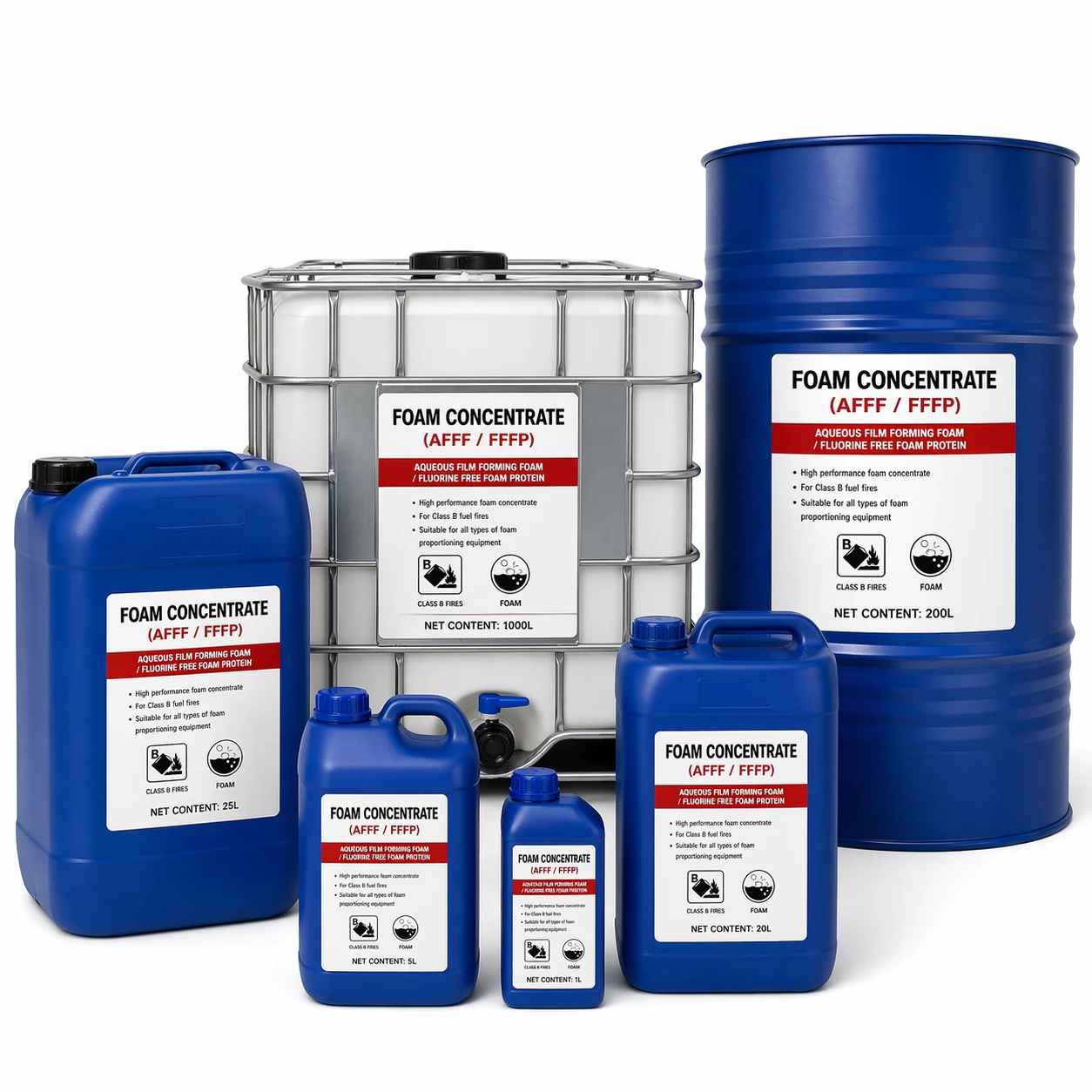
Drums of AFFF and FFFP foam concentrate
01

Foam Concentrate (AFFF / FFFP)

Best for Class B hydrocarbon and polar solvent fires. AFFF and FFFP at 1%, 3% or 6% depending on the application, in 200 to 1,000 L drums. PFAS notice: AFFF concentrates contain per- and polyfluoroalkyl substances, and regulatory restrictions apply in the EU, the US and other markets. Verify local acceptance before ordering — we can advise on fluorine-free alternatives where they are required.

Compare the specification Get a quote
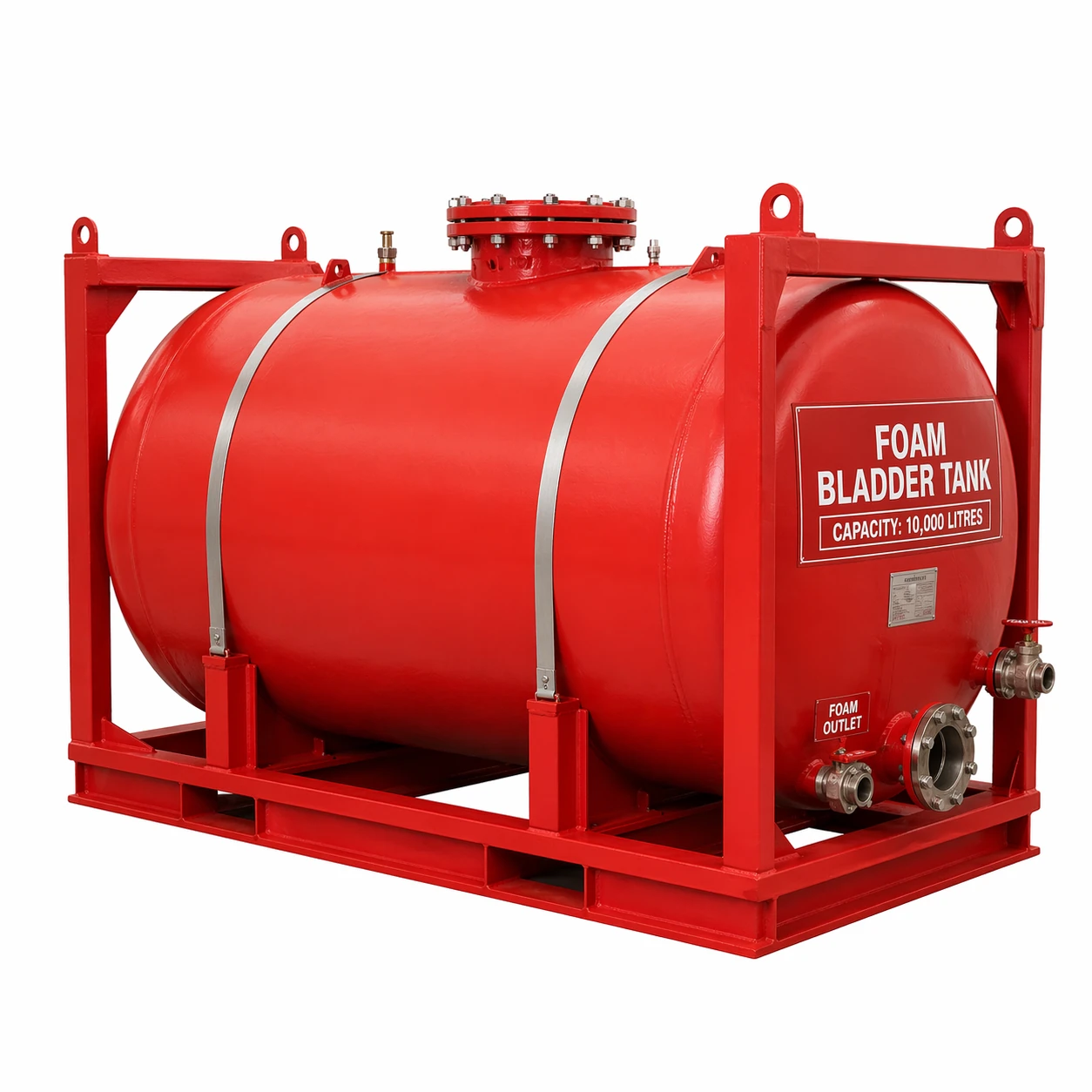
Foam bladder tank with pressure fittings
02

Foam Bladder Tanks

Best for self-contained proportioning where no separate concentrate pump is wanted. A pressure-rated tank with an internal bladder keeps foam separate from water until discharge. 100 to 2,000 L, 1.0 to 1.6 MPa, carbon steel.

Compare the specification Get a quote
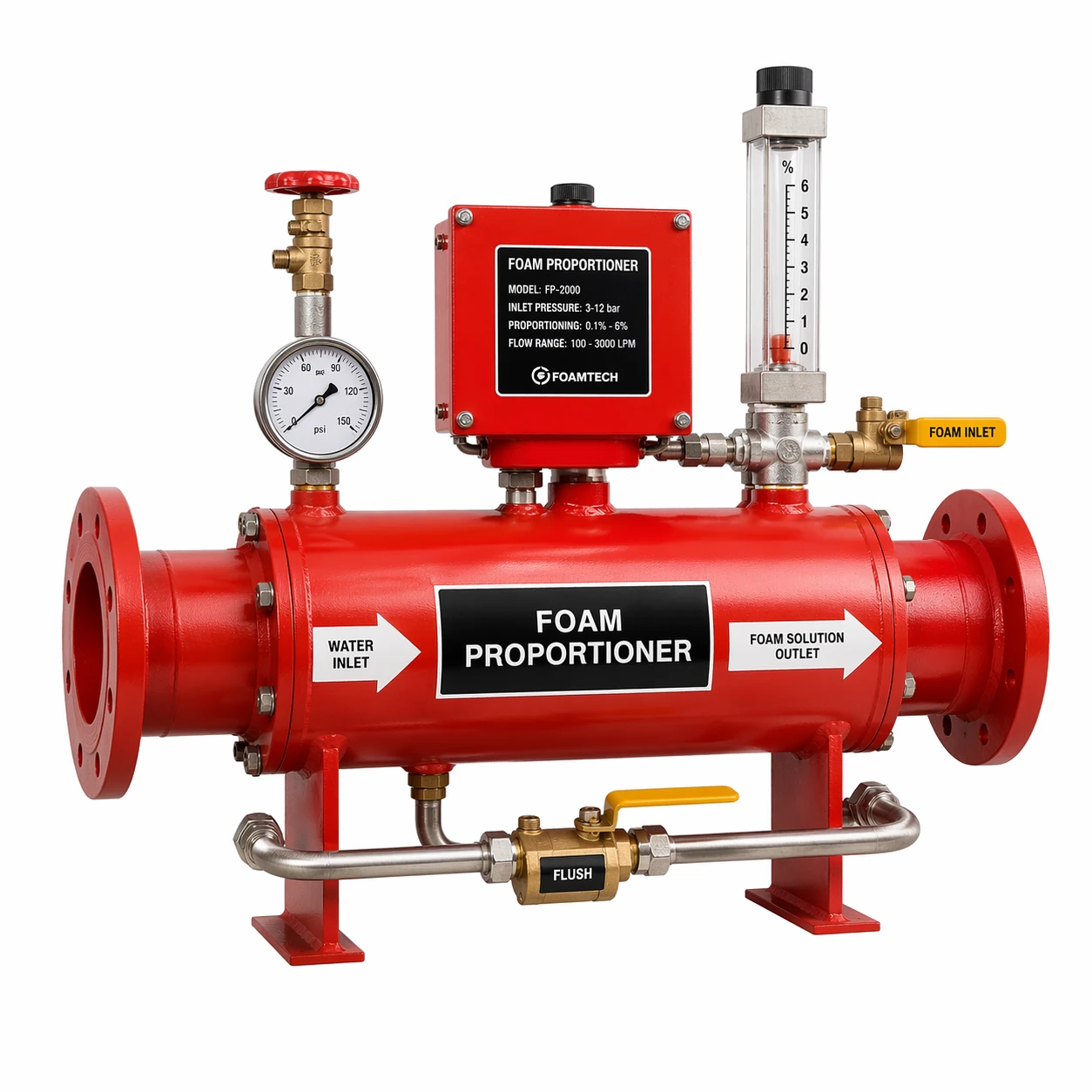
Inline and balanced-pressure foam proportioners
03

Foam Proportioners

Best for getting the mix ratio right before the foam-making equipment sees it. Inline inductors, around-the-pump and balanced-pressure types, 200 to 5,000 L/min, at 1%, 3% or 6%. Brass or steel.

Compare the specification Get a quote
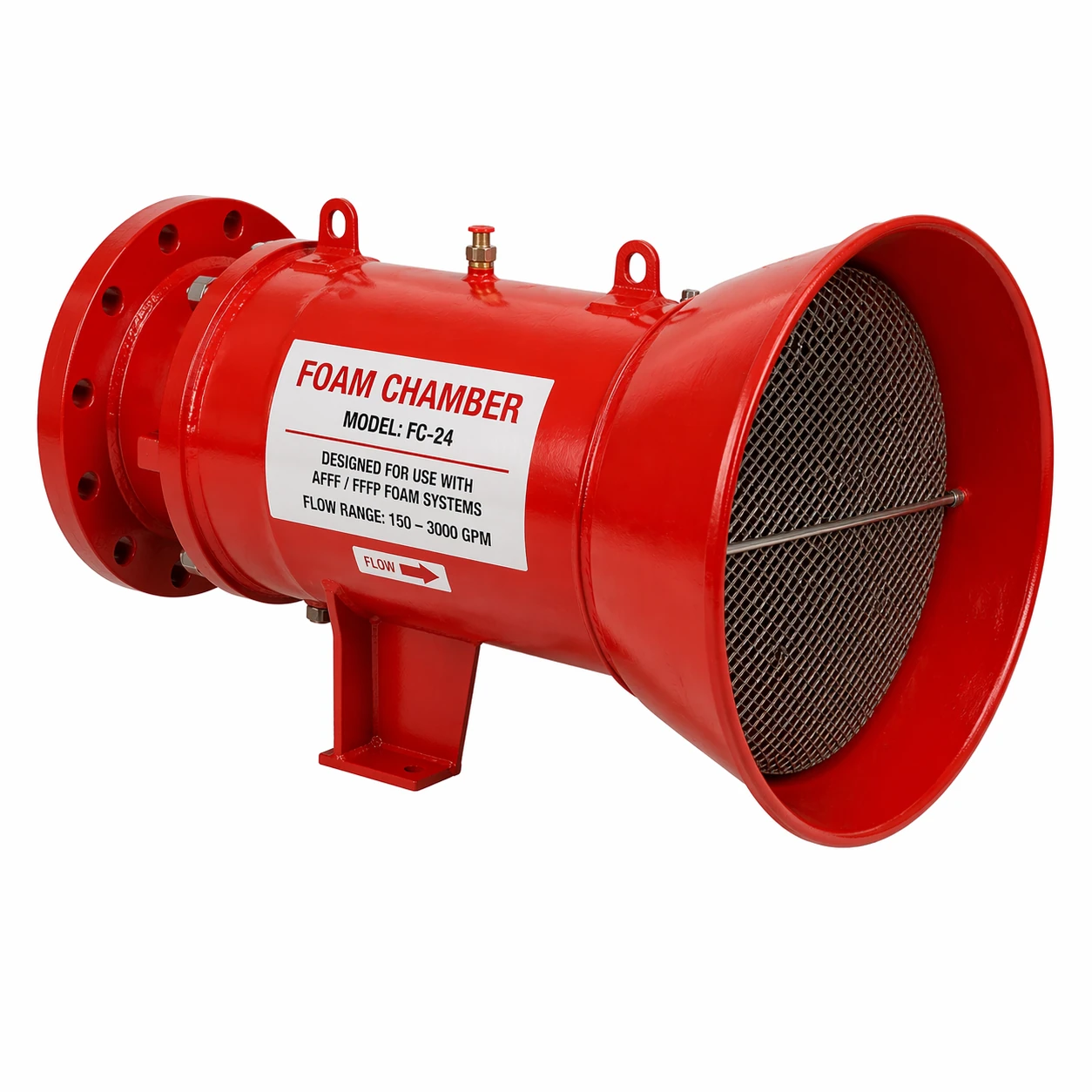
Foam chamber mounted on a storage tank shell
04

Foam Chambers

Best for fixed-roof storage tanks, delivering foam onto the liquid surface. Sub-surface and top-surface application per EN and NFPA 11. Capacity follows the system design; 0.35 to 0.7 MPa, carbon steel.

Compare the specification Get a quote
High-expansion foam generator
05

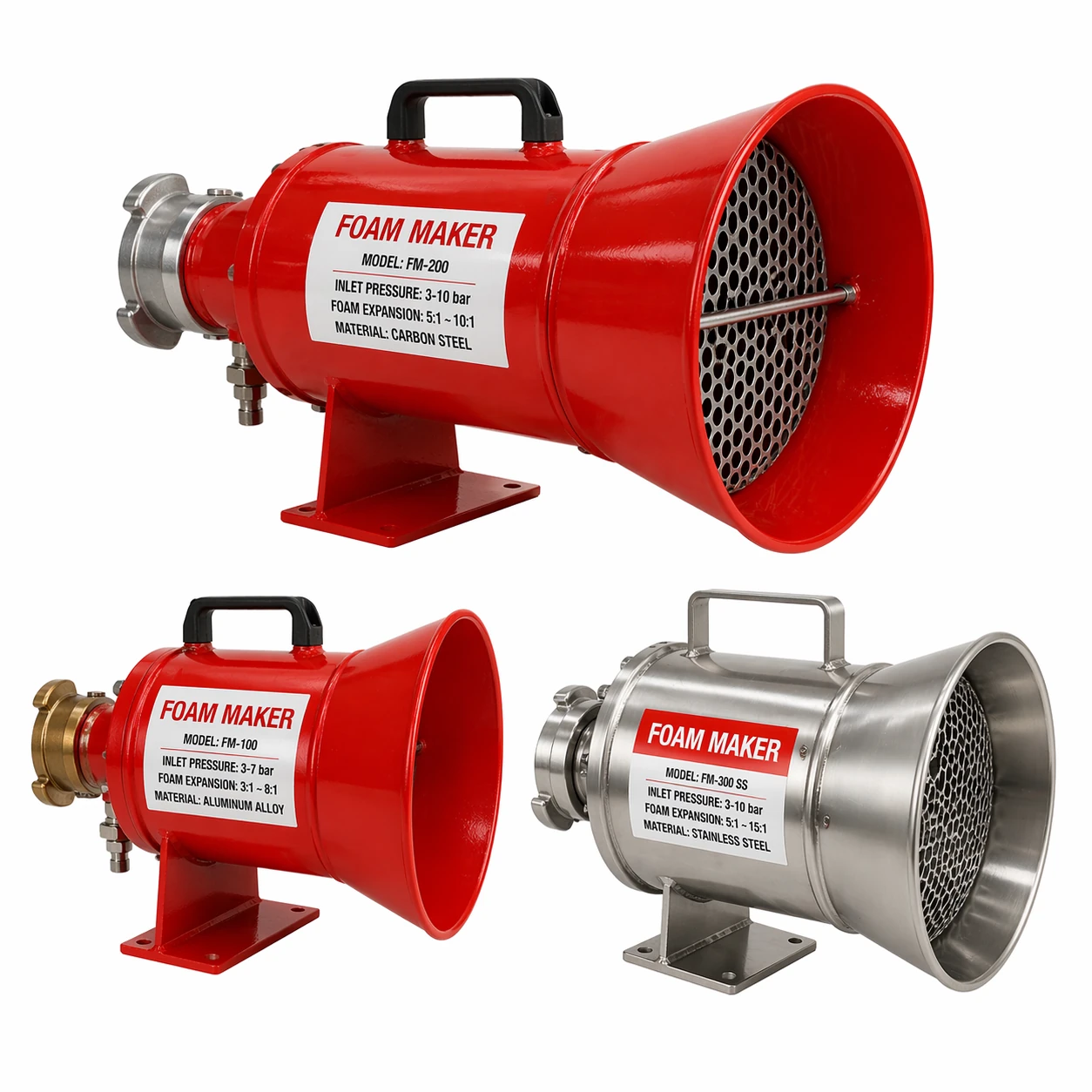
Foam Makers

Best for three-dimensional flooding of enclosed spaces — warehouses, hangars, cable tunnels, basement car parks. Medium and high expansion from 20:1 to over 200:1, at 500 to 5,000 L/min. Aluminium or steel.

Compare the specification Get a quote
Oscillating foam monitor on a fixed platform
06

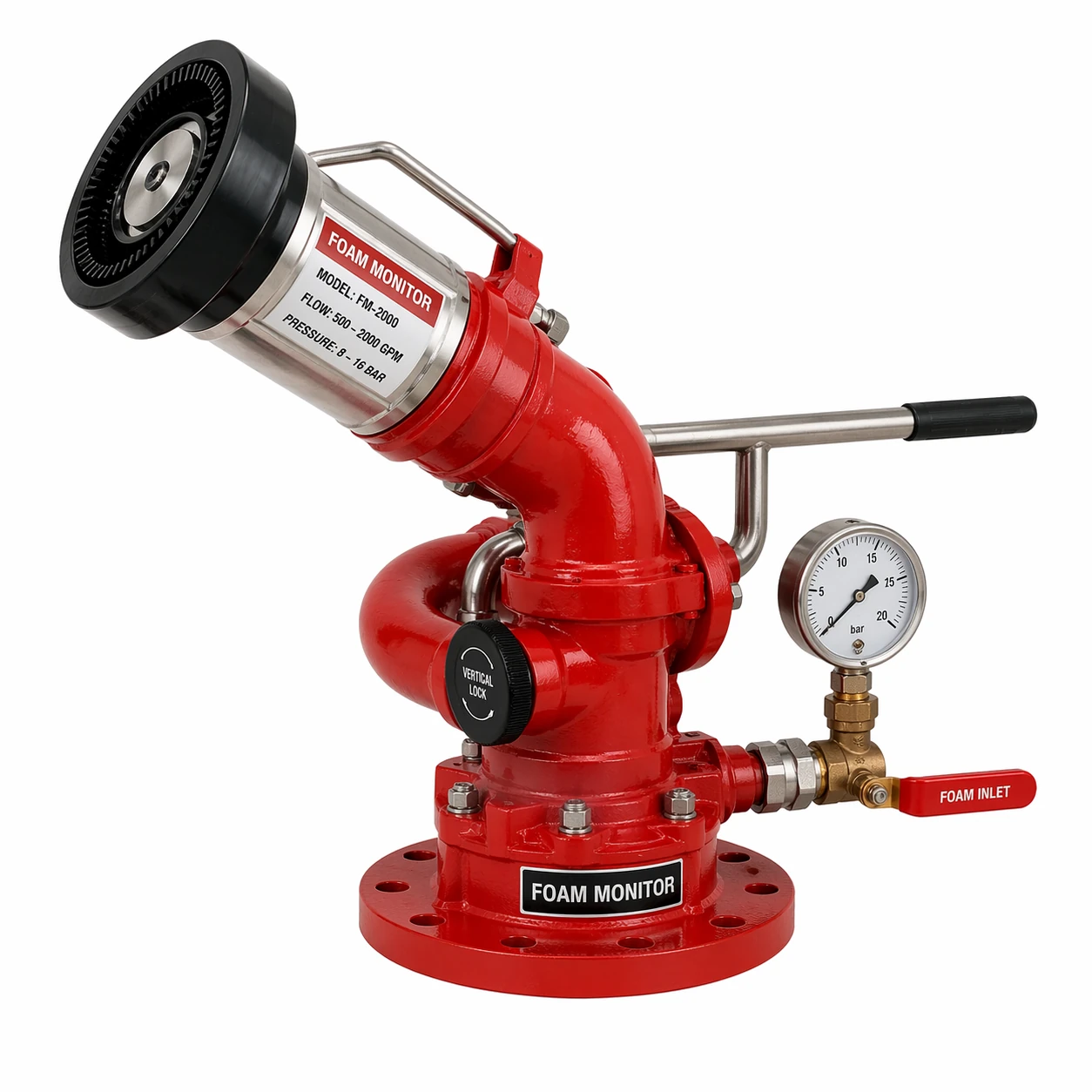
Foam Monitors

Best for long-range delivery across large open industrial areas. Fixed or portable oscillating monitors, remote-controlled or manual, 500 to 8,000 L/min with a 30 to 80 m range. Stainless steel or aluminium.

Compare the specification Get a quote
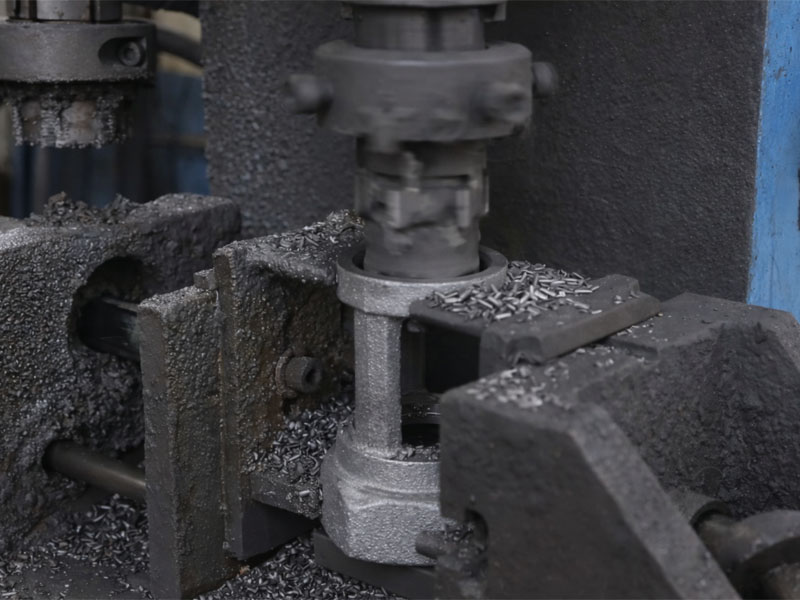
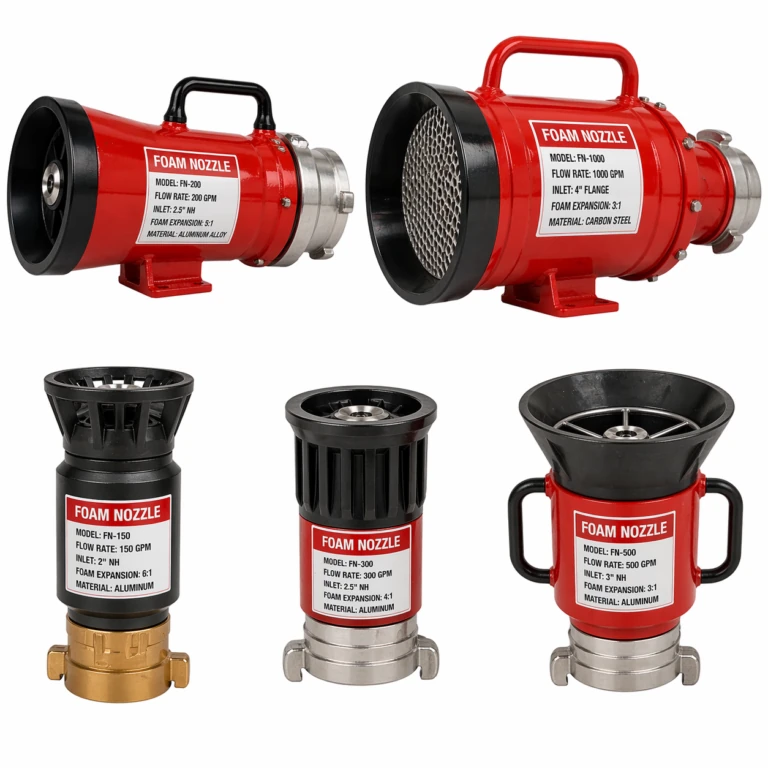
Aspirating and non-aspirating foam nozzles
07

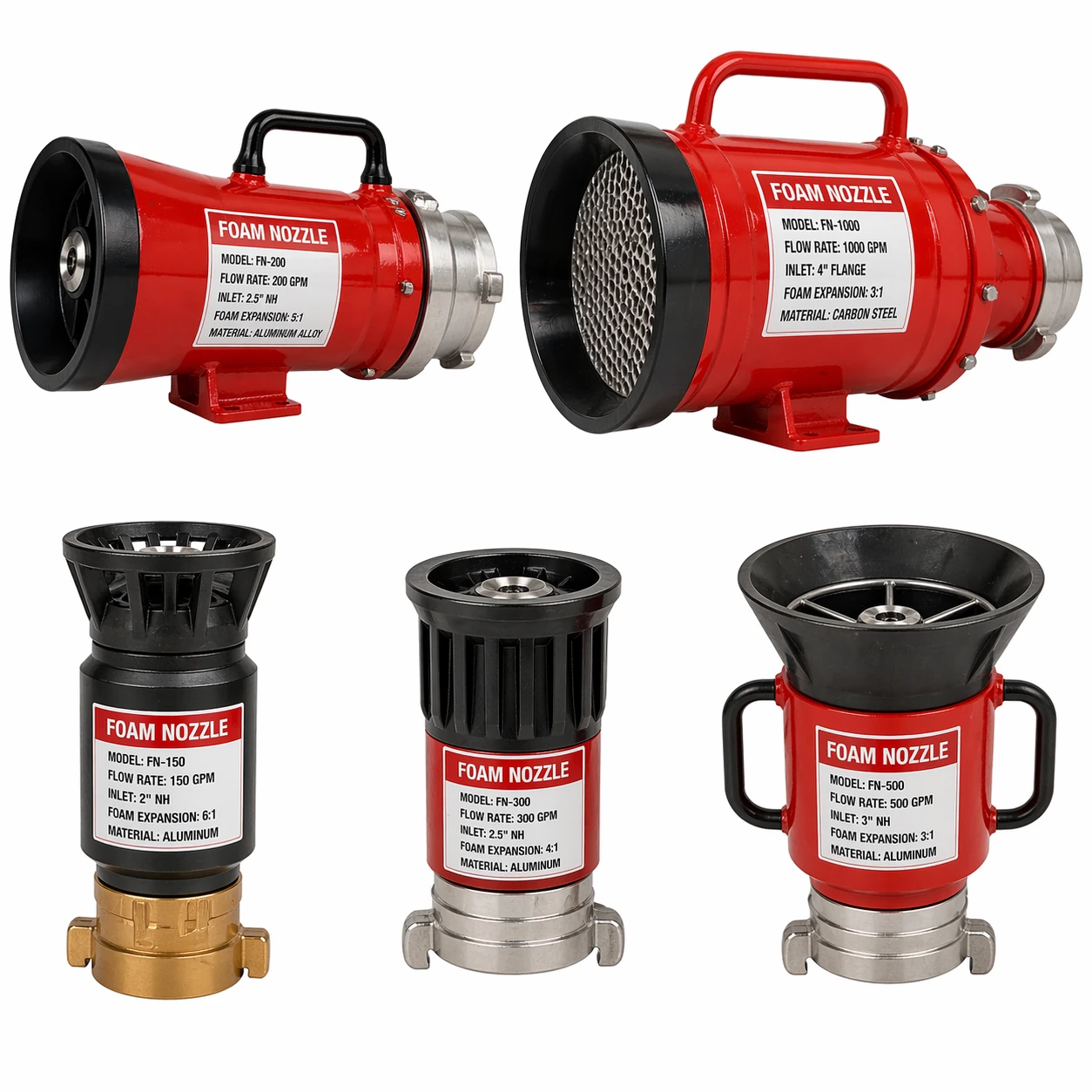
Foam Nozzles

Best for first-responder and fixed-installation application. Hand-operated and fixed types, aspirating and non-aspirating, 60 to 480 L/min. Brass or aluminium. Also used on foam hose reel systems and in brigade field response.

Compare the specification Get a quote
Foam-water deluge valve assembly
08

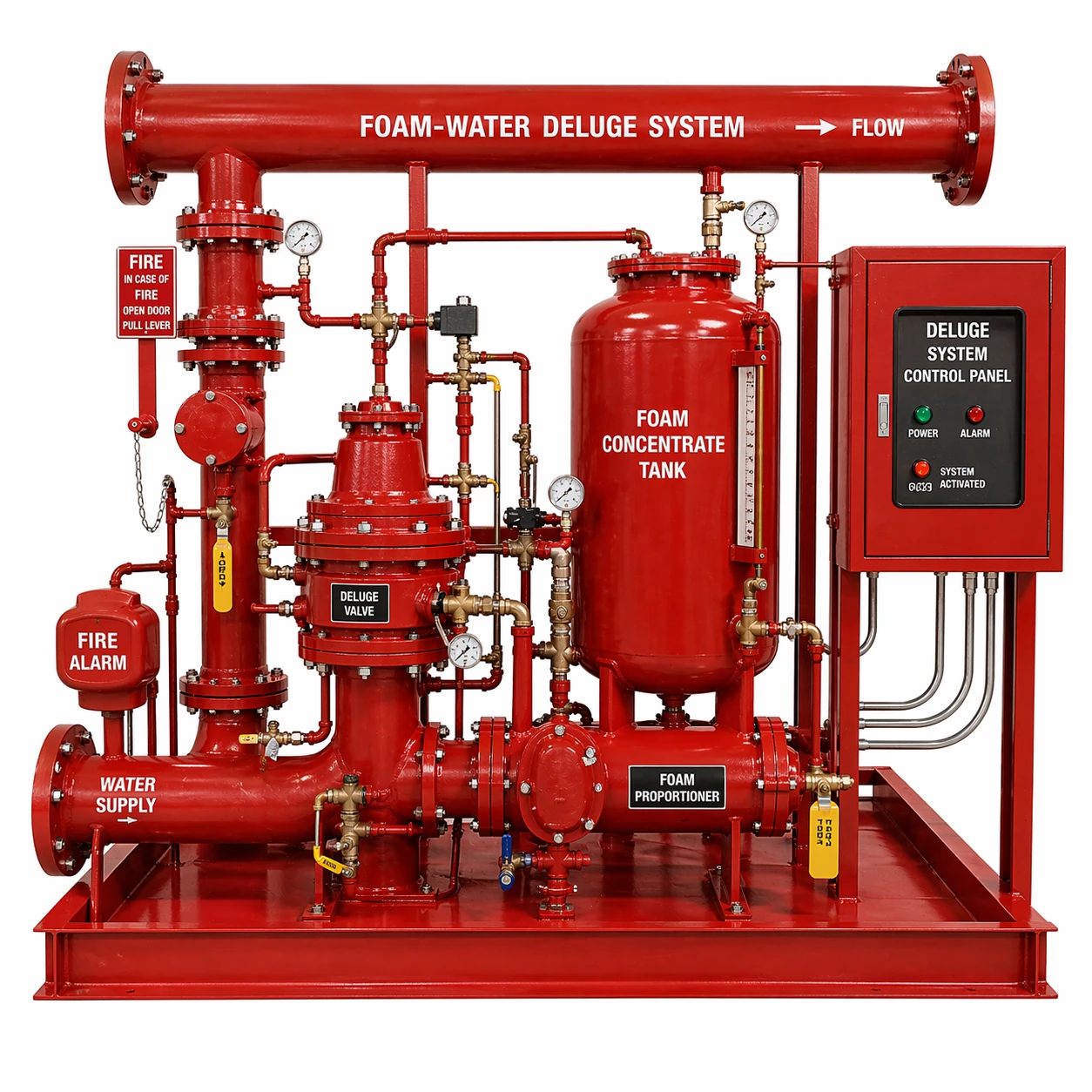
Foam-Water Deluge Systems

Best for fixed-area flooding in hangars, transformer bays, spray booths and flammable liquid processing. An integrated deluge valve and foam injection assembly delivering a foam-water blanket on actuation. 0.35 to 1.2 MPa, carbon steel.

Compare the specification Get a quote

Specification

The eight components side by side

Capacity or flow, working pressure, material, minimum order and lead time. On a mixed BOQ these are quoted per line, because the components do not run on one schedule.

ComponentCapacity / flowWorking pressureMaterialMOQ
Foam concentrate (AFFF / FFFP)200–1,000 L drums—Steel drum200 L
Bladder tank100–2,000 L1.0–1.6 MPaCarbon steel200 pcs
Proportioner200–5,000 L/min0.35–1.2 MPaBrass / steel200 pcs
Foam chamberPer system design0.35–0.7 MPaCarbon steel200 pcs
Foam maker500–5,000 L/min, 20:1–200:1Per designAluminium / steel200 pcs
Foam monitor500–8,000 L/min, 30–80 mPer designSS / aluminium200 pcs
Foam nozzle60–480 L/minPer designBrass / aluminium200 pcs
Foam-water delugePer system design0.35–1.2 MPaCarbon steel200 pcs
Lead timeBulk 35–60 days from order confirmation across all components; sample review 15–20 days. Trade terms EXW, FOB Xiamen or CIF; payment T/T, 30% deposit and 70% before shipment.

What we can change

Configuration, and the order to settle it in

Tank capacities, monitor flow rates and nozzle fittings can be built to the project specification, with a pre-production sample before the full run. What cannot be negotiated is the physics.

01

Concentrate first

Match the concentrate to the fuel: hydrocarbon or polar solvent decides AFFF against FFFP, and the concentration route (1%, 3% or 6%) decides everything downstream of it.

02

Then proportioning

Inline inductor, around-the-pump, or balanced pressure. The choice follows the flow range and whether the system has to hold accuracy across a wide turndown.

03

Then the discharge device

Chamber for a fixed-roof tank, maker for enclosed-space flooding, monitor for open-area reach, nozzle for hand application. The expansion ratio has to suit the device, not the other way round.

04

Then check the supply

Confirm the required flow against the water supply that will actually be available on site rather than the design figure. This is the check most often skipped, and the one that invalidates the rest.

Why here

Six reasons the component order stays whole

Most contractors source foam components from four or five manufacturers, each with its own lead time, documentation and minimum order. All eight types are made in the Quanzhou facility, with no subcontracting on core components.

Foam component production
All eight component types made in-house, no subcontracting
Tank fabrication
BOQ reviewed line by line, with a quotation to match
Pressure testing
ISO 9001 documentation package for tender submission
Packing for export
35–60 day bulk lead time; rolling schedules for repeat supply

PFAS-aware sourcing. We flag the regulatory restrictions on AFFF rather than leaving you to discover them, and can advise on fluorine-free alternatives for markets where PFAS-containing foam is restricted — the EU, Australia and several US states. What we will not do is tell you your market permits something; that confirmation is yours to obtain.

Common questions

Questions from system buyers

Which components do you supply?

Eight core types: AFFF and FFFP concentrate, bladder tanks, proportioners, chambers, makers in medium and high expansion, monitors, nozzles, and foam-water deluge systems. Individually or as a complete package against a BOQ.

Is AFFF still permitted in my market?

That is yours to confirm, and it is the first question on this page for a reason. AFFF contains PFAS, and restrictions or phase-outs apply in the EU, the United States, Australia and elsewhere. Check with your environmental regulator or fire protection engineer, tell us the outcome, and we will quote to match — including fluorine-free alternatives where those are what your market accepts.

Can you supply a complete system for a tank farm?

All the components, yes. Send the tank schedule with roof types: fixed-roof takes chambers, floating-roof takes makers, and quoting without that distinction produces a bill of materials that cannot be installed. We do not design the system or certify it — that is your fire protection engineer’s work.

What concentration routes are available?

1%, 3% and 6%. The route has to match the proportioner and the discharge device, so it is settled early rather than adjusted later. Drums run 200 to 1,000 L with a 200 L minimum.

Can components be customized?

Bladder tank capacities, monitor flow rates and nozzle fittings can be built to project specification, with a pre-production sample before the full run. Send the drawing or the specification sheet rather than a description.

What is the lead time?

Bulk 35–60 days from order confirmation, sample review 15–20 days. On a repeat component order with stable specifications a rolling supply schedule can be agreed to fit a project programme.

What documentation comes with a foam order?

Test reports, material specifications, production records and the ISO 9001 certificate, as a package for tender submission. Third-party pre-shipment inspection is supported, including SGS, Bureau Veritas and Intertek.

Do foam components ship as dangerous goods?

The hardware does not. Foam concentrate is shipped in steel drums and its classification depends on the formulation and the destination’s rules, so confirm the concentrate’s status for your route at inquiry rather than at booking.

Can foam components ship with other fire products?

Yes. Concentrate drums, tanks and hardware can travel with extinguishers, sprinklers, hydrants and cabinets on one purchase order, with high-cube packing coordinated for the mixed cargo.

How do you quote a BOQ?

Line by line, with lead time against each line rather than one figure for the order — concentrate and a motor-driven monitor do not run on the same schedule. Response on a BOQ is typically two business days, since the technical review happens before the reply.
BOQ review

Send the component list or the whole BOQ

Hazard and fuel, application area, the flow the design requires, and the destination market. We come back with a line-by-line component quotation, the certifications that apply, and a production timeline — and we will say plainly if the concentrate you have specified is a problem where it is going.

Submit project inquiry

Buyer guides

Before you specify a foam system

Which system type fits, what to inspect on the nozzle, and the failure that shows up in service.

Foam Suppression System Types
01

Foam Suppression System Types

Foam suppression system types explained: low, medium, and high expansion, and where each protects best.

Read guide
Foam Nozzle Clogging: Buyer Inspection Checklist
02

Foam Nozzle Clogging: Buyer Inspection Checklist

A B2B inspection and RFQ checklist for foam nozzle clogging. Learn what evidence to collect, when replacement needs engineering review, and what documents to request from…

Read guide
Foam Proportioner Mix Ratio Drift? 5 Quick Fixes
03

Foam Proportioner Mix Ratio Drift? 5 Quick Fixes

Fix foam proportioner mix ratio drift with 5 field-tested steps: measure discharge concentration, inspect orifice wear, check pressure differentials.

Read guide