
Upright sprinklers
Upward deflector for wet-pipe building and project systems. Chosen where pipework stays exposed and the layout is designed around upright discharge.
- DN15 / DN20
- K57 / K80 / K115
- 57 to 141°C reference range
- Brass body
Six series of fire sprinklers, valves and flow indicators in one quotation, from a self-owned plant that has been building sprinklers and valves in Nan’an since 2001. The numbers you need to route a specification are on this page, not behind an email.
Product range
Three fire sprinkler orientations and three valve or indicator routes. Orientation decides where the deflector throws water; the valve route decides how the system releases and signals. Pick the row that matches your drawing, then take its bore and K-factor to the matrix below.
Choosing from a photograph instead of the drawing is where orders go wrong. The three failures that recur are a K-factor mismatch against the design density, a wrong temperature rating for the ceiling or process condition, and a thread-standard mismatch that is only discovered on site.
Upward deflector for wet-pipe building and project systems. Chosen where pipework stays exposed and the layout is designed around upright discharge.
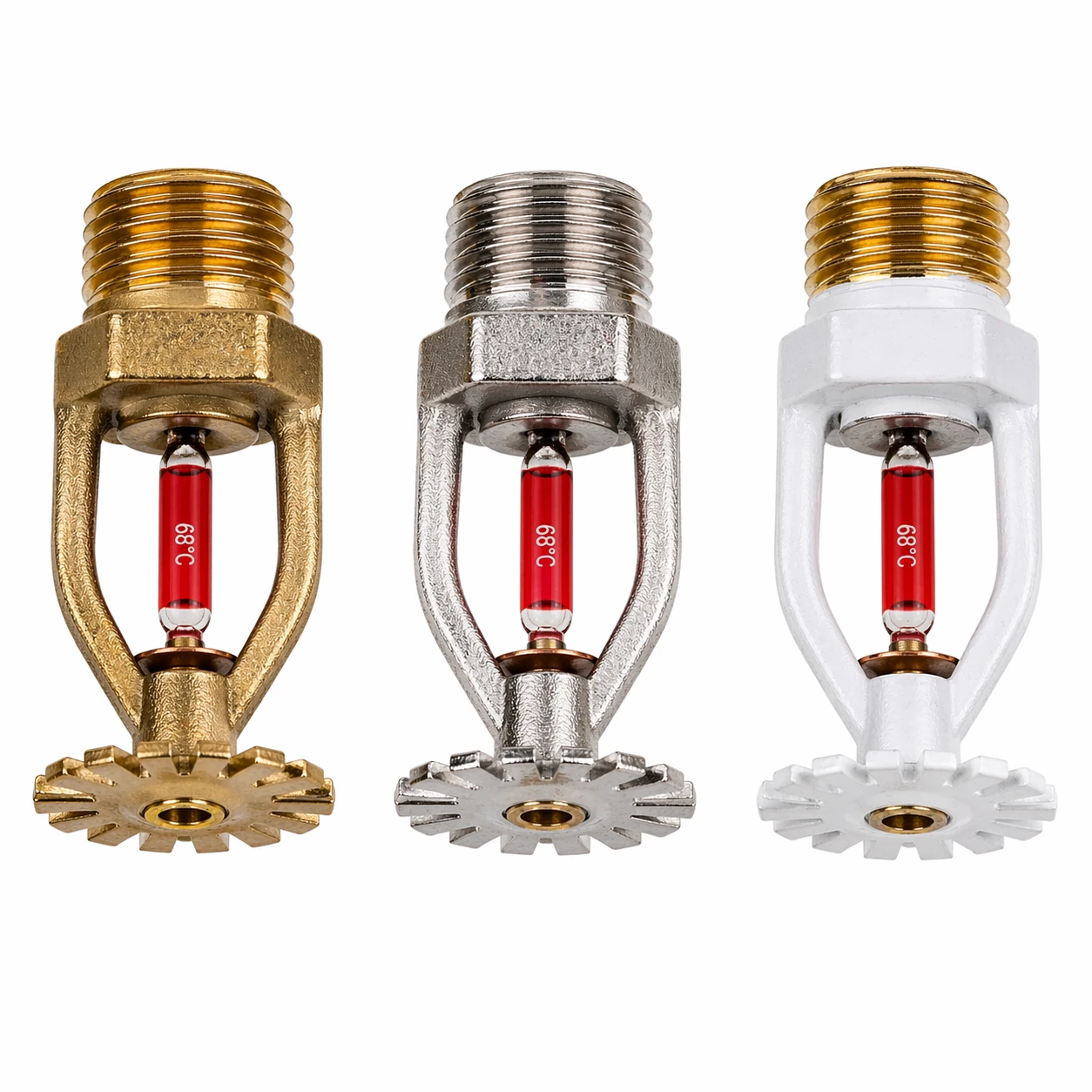
Downward deflector for common commercial and residential ceiling layouts. The default route when heads sit below a finished ceiling.
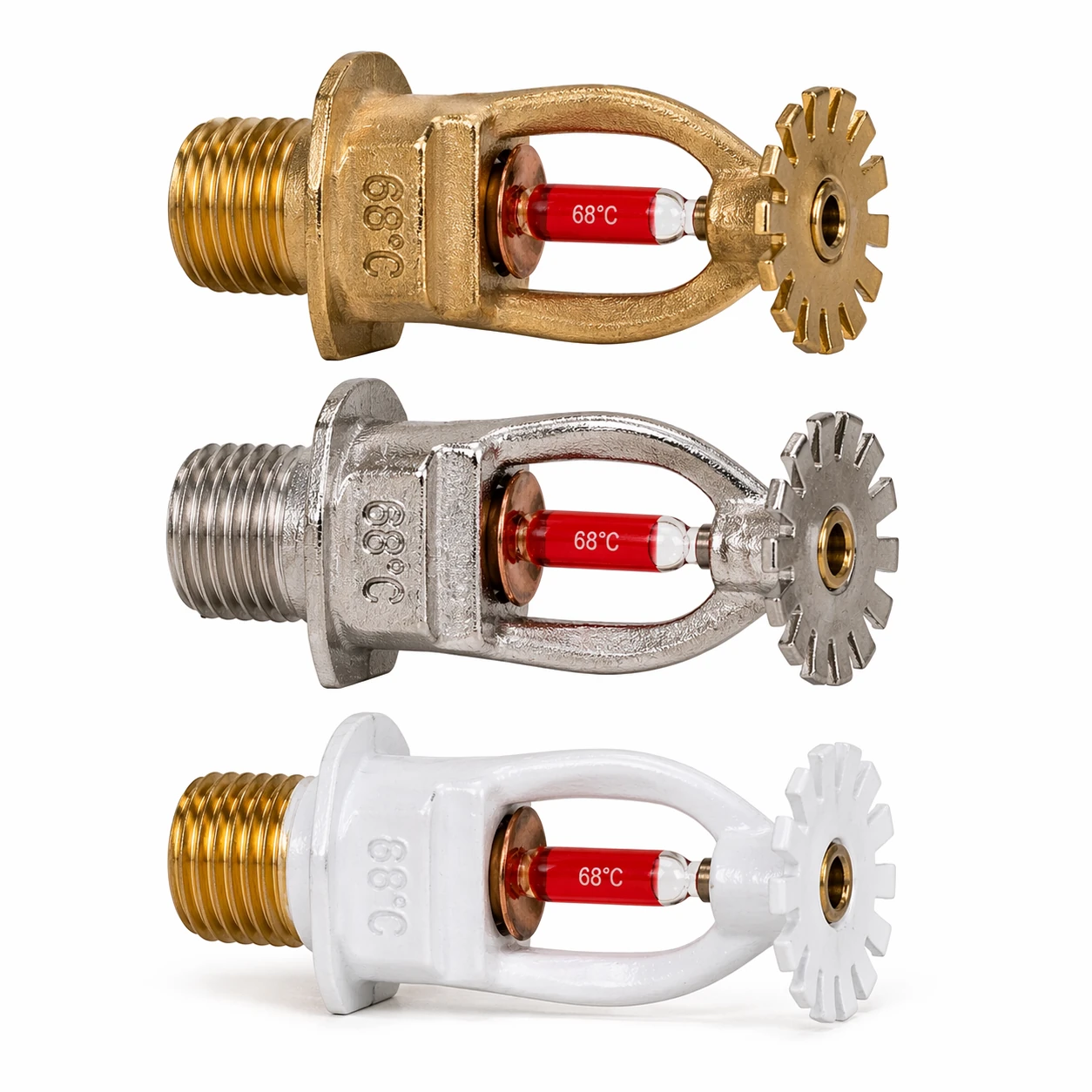
Wall-mounted heads for corridors, rooms and retrofits where a ceiling route is unsuitable. Note the narrower temperature band against the other two.
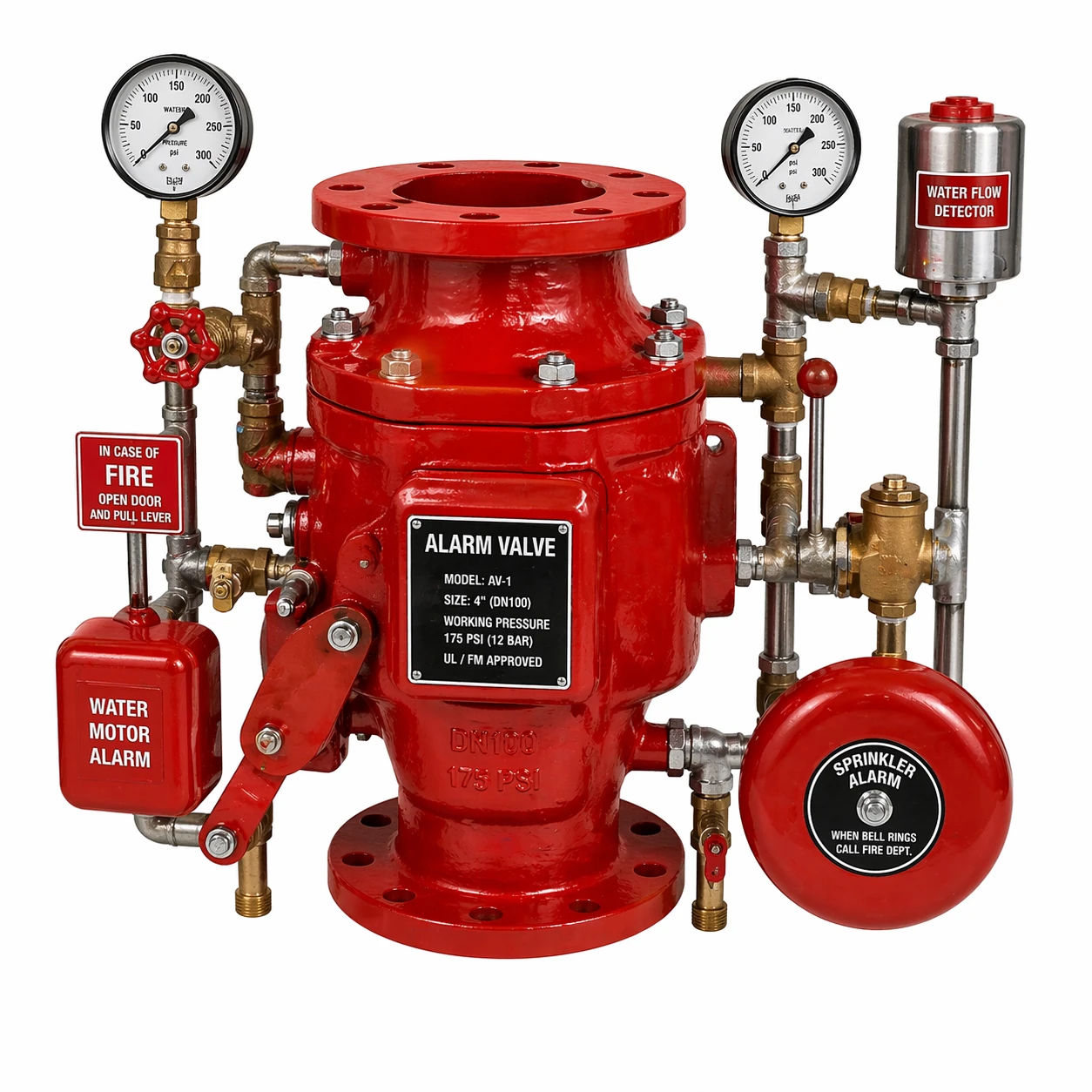
Prevents reverse flow and raises the alarm when water moves. Valve size, trim arrangement and alarm interface have to be quoted together.
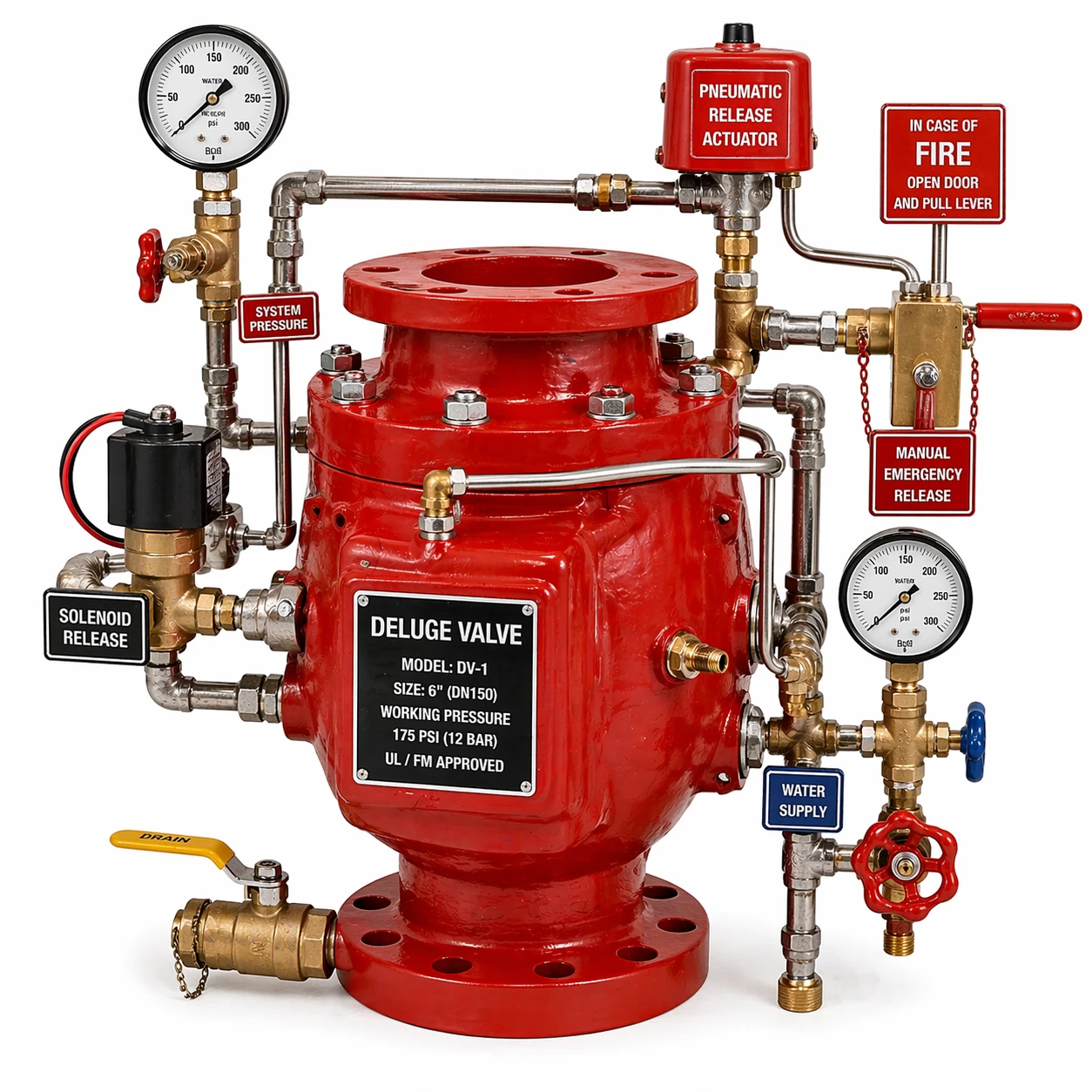
For open-head deluge systems, where release and control have to be coordinated with the detection side. Common on industrial and high-hazard projects.
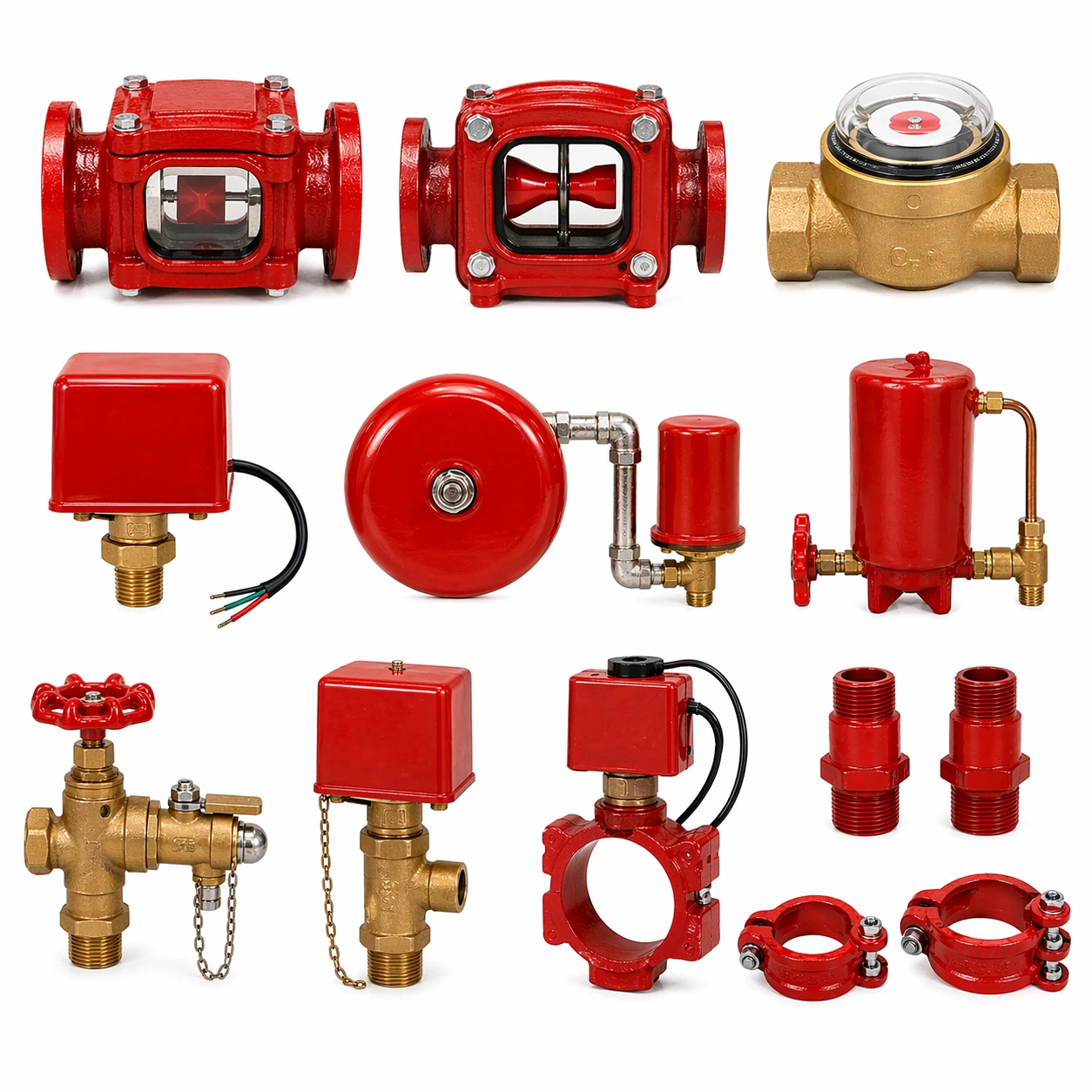
Branch-line detection that passes a flow signal to the fire alarm system. Nominal bore and alarm interface both have to match the branch.
Photographs are series routing illustrations from the catalogue edition. They are not model-level proof; a model-bound photograph is issued against your confirmed configuration.
One matrix rather than six specification sheets. Planning MOQ and HS code sit in the same table as bore and material, because those are the four values that usually move a price.
| Comparison point | Upright | Pendant | Sidewall | Alarm valve | Deluge valve | Flow indicator |
|---|---|---|---|---|---|---|
| Available size | DN15 / DN20 | DN15 / DN20 | DN15 / DN20 | DN65 to DN200 | DN65 to DN200 | DN50 to DN150 |
| K-factor or pressure basis | K57 / K80 / K115 | K57 / K80 / K115 | K57 / K80 | Up to 1.2 MPa | Up to 1.2 MPa | Up to 1.2 MPa |
| Temperature or system basis | 57 to 141°C | 57 to 141°C | 57 to 93°C | Wet alarm valve route | Deluge release route | Branch flow detection |
| Body material | Brass | Brass | Brass | Ductile iron / carbon steel | Ductile iron / carbon steel | POM / brass |
| Planning MOQ | 2,000 pcs | 2,000 pcs | 2,000 pcs | 200 pcs | 200 pcs | 200 pcs |
| Indicative HS code | 8424.90.90 | 8424.90.90 | 8424.90.90 | 8424.90.90 | 8424.90.90 | 8424.90.90 |
Values are taken from the May 2026 catalogue edition. Current sale status and manufacturing origin are confirmed during the quotation, together with the exact orientation, K-factor, temperature rating, thread and valve trim. MOQ shown is a planning figure per model, not a contract term.
Destination market decides the document set that ships with the goods. Confirm it with the enquiry so the packing list and declaration are prepared once.
Customization options
Quotes diverge when these two lists get mixed together. The left column moves with your order. The right column belongs to the model and cannot be negotiated into a different value.
Each pairing above is the one the factory checks it against.
The system type decides which valve family is even eligible. Starting from the part number is how projects end up with a deluge valve on a wet-pipe drawing.
Pipework stays charged. Pendant heads under finished ceilings, upright where pipework is exposed, with a wet alarm check valve and flow indicators on the branches.
Needed to quote: ceiling type, K-factor, temperature rating, branch bore.
Where freezing or accidental discharge rules out a charged system. Head selection narrows and the valve and trim arrangement carries most of the specification.
Needed to quote: system route, valve size, trim and alarm interface.
Open heads with a deluge valve, coordinated with the detection and release side. Industrial yards, tank farms and process areas.
Needed to quote: hazard basis, valve size, release arrangement.
Higher design density, so K115 and the upper temperature band appear more often. Volumes usually clear the 2,000 pcs planning MOQ per model without splitting.
Needed to quote: storage arrangement, design density, quantity per model.
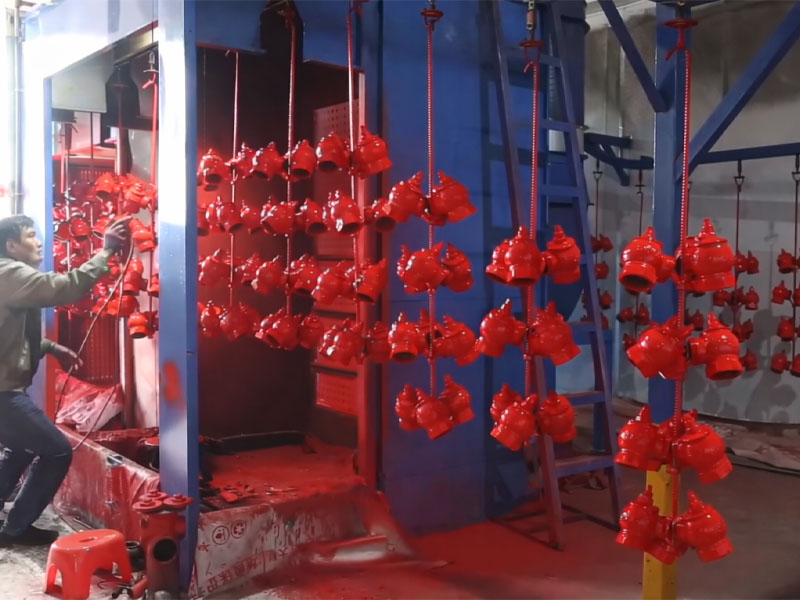
15,000 square metres, 20 production lines, 193 people, and a reference output of 45 high-cube containers a month.
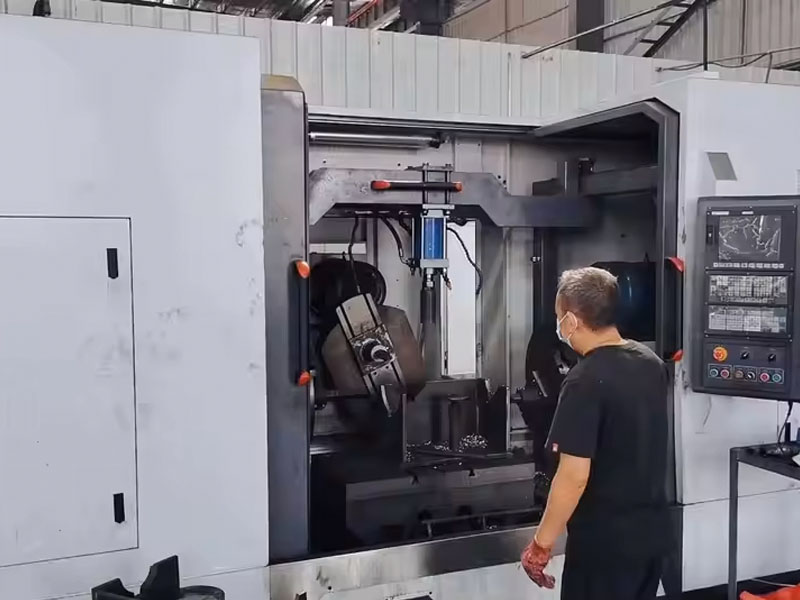
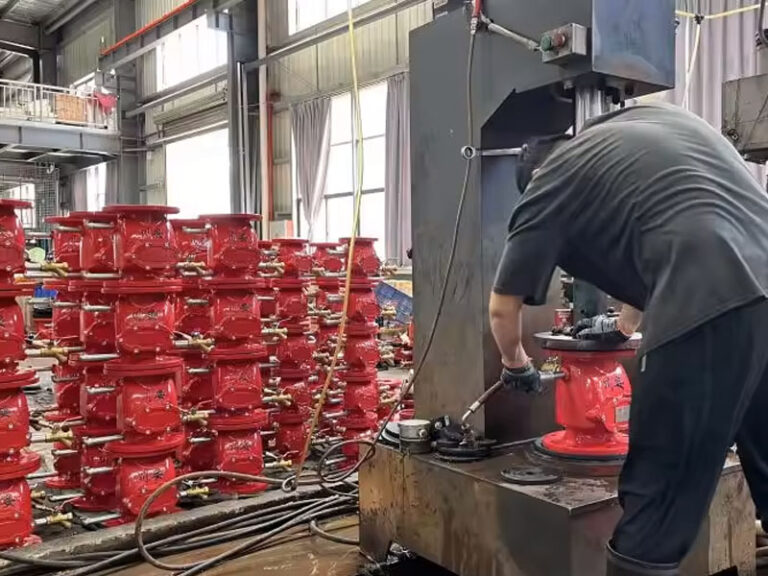
Production floor
One of 20 lines. Shows plant scale and line arrangement. It does not identify a sprinkler model.

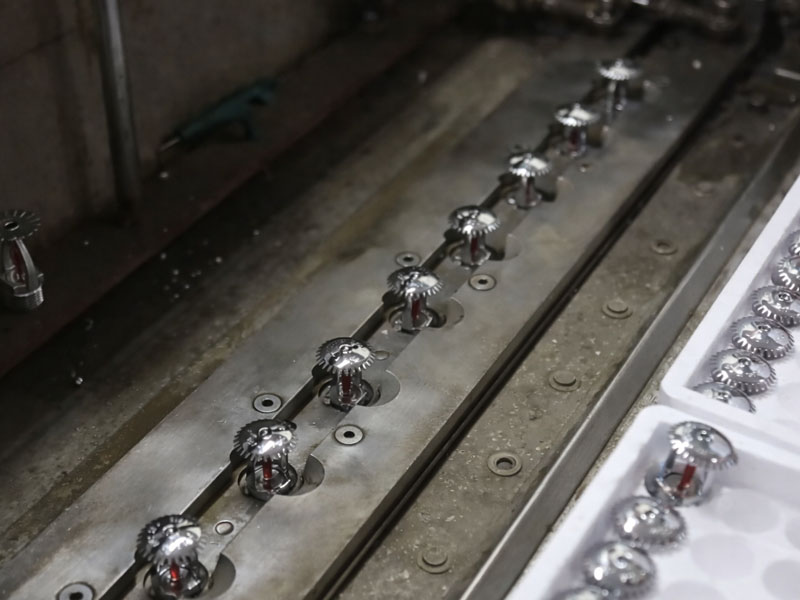
Assembly and inspection
Where incoming, in-process and final checks are carried out. Batch inspection records are issued per order.
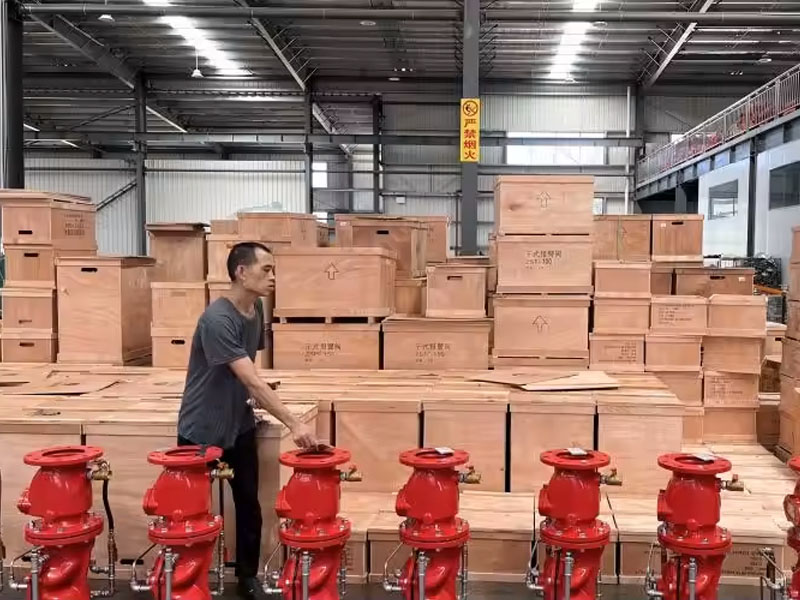
Packing and marking
Carton marking is checked against the order before release. Mixed loading is accepted.
Finished goods storage
General warehouse view across product families. This frame is not a sprinkler or valve stock record.
CE scope. Currently confirmed for sprinklers and valves, which is the scope of this page. It does not extend to extinguishers, hydrants, hoses or cabinets.
ISO 9001 scope. Quality management is certified at company level. That is a company-level certificate, not a product certification, and validity is confirmed per order.
What ships with the goods. A declaration of conformity and the batch inspection record are issued against the confirmed configuration and destination market.
Sample review runs 15–20 business days from payment confirmation. Bulk production is 35–60 days from order confirmation, depending on the K-factor and temperature mix and the current schedule. Sprinklers carry a 2,000 pcs MOQ against 200 pcs for valves, so a mixed order usually schedules as two runs rather than one — confirm the delivery date you need at inquiry and we will say which part of it the lead time supports.
K57, K80 and K115 across upright and pendant heads, with a 57 to 141°C bulb reference range. Sidewall heads run K57 and K80 with a 57 to 93°C range. The exact combination for your model is confirmed in the quotation.
Wet alarm check valves and deluge valves run DN65 to DN200; water flow indicators run DN50 to DN150. All three are referenced up to 1.2 MPa. Trim arrangement and alarm interface are quoted with the valve, not after it.
As a planning figure, 2,000 pcs per sprinkler model and 200 pcs per valve or indicator model. It is a planning number rather than a contract term, and mixed loading across families is accepted.
Yes, in 15 to 20 days. Send the orientation or valve route, bore, K-factor, temperature rating, thread standard and packing assumption so the sample matches the configuration that will be quoted.
CE is currently confirmed for sprinklers and valves, and quality management is certified to ISO 9001 at company level. Scope, validity and holder are confirmed in writing for your order.
The six series are listed in the May 2026 catalogue edition. Current sale status and manufacturing origin for a specific model are confirmed during the quotation.
EXW, FOB or CIF, with payment by T/T. The applicable term is fixed at order confirmation along with the document set for the destination market.
Usually K-factor, temperature rating, thread standard, body material, quantity per model or packing method. Making all six visible in the enquiry is the fastest way to get comparable prices.
Heads, alarm and deluge valves and flow indicators can be quoted together and shipped as a mixed load. Detection and release equipment outside this page is handled through the solutions route.
Send the drawing with system type, hazard basis and destination market. The specification inputs still missing will be listed back to you before any price is quoted.
Ten inputs price a quotation. Anything still undecided can be marked open and it will be confirmed before pricing rather than assumed.
Buyer guides
Three checks that decide whether two sprinkler quotations are comparable.
Fire sprinkler specification checklist for project RFQs: type, temperature rating, and finish details to settle before quoting.
Read guide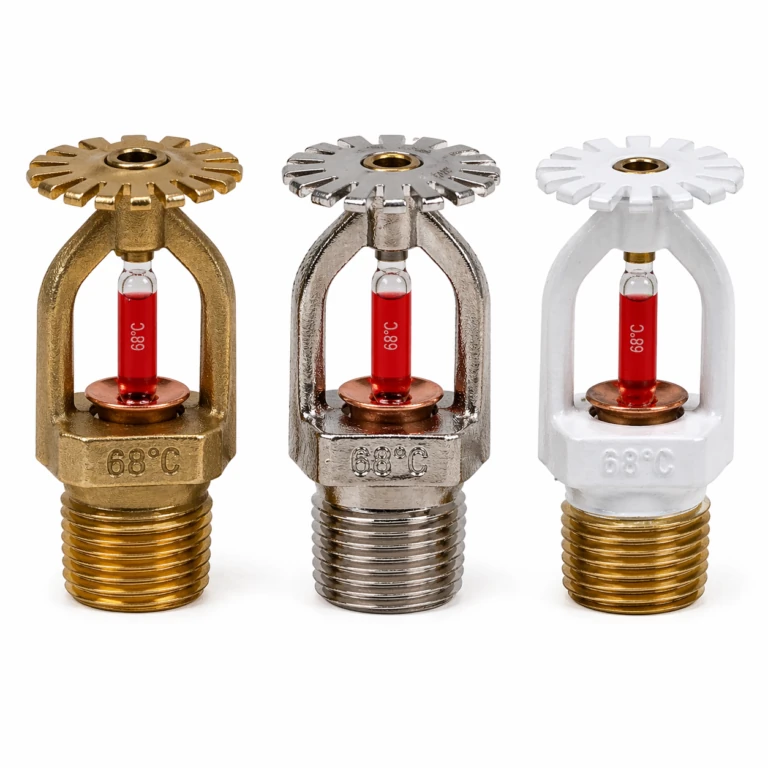
Fire sprinkler thread, orifice, and K-factor checks: how buyers verify the sprinklers quoted match the system design.
Read guideAudit fire sprinkler suppliers with a scorecard covering certificate scope, QC records, sample approval, delivery evidence, and reorder controls.
Read guide