Fire department connections often fail on thread standard. NPT, BSP, and NH all fit the same drawing box, and the mismatch is usually found on site with the pipework already in place.
This checklist fixes the duty, the inlet and outlet detail, the thread standard, and the material and approval scope before the enquiry goes out.
Direct answer: State the thread standard for both inlet and outlet explicitly — NPT, BSP, or NH — along with body and trim materials, pressure rating, and the approval the authority will accept. A drawing without the thread standard is not a specification.
Define the fire department connection duty
Compare Define the fire department connection duty for fire department connection against one RFQ revision. Each row should identify the requirement, approval evidence, and buyer action before production.
| Requirement | Factory control | Evidence to verify | Order risk | RFQ follow-up |
|---|---|---|---|---|
| Sample approval | Pre-production sample submitted per agreed spec; production lot held until sign-off. | Compare sample against dimensional drawing, thread gauge, and marking layout; retain sealed reference. | Shipment of non-conforming units without approved benchmark; rework cost and project delay. | Request pre-production sample and written approval checklist before production release. |
| Material / substrate | Incoming material certs verified against ASTM/EN grade; mill test reports kept per batch. | Cross-check material certificate number, chemical composition, and mechanical properties against RFQ spec. | Subgrade alloy causes premature corrosion or thread failure; hidden liability after installation. | Require material certificate with each shipment; spot-check via third-party lab on first order. |
| Width or size tolerance | In-process dimensional check at casting, machining, and assembly; final gauge inspection before packing. | Measure inlet/outlet bore, flange OD, bolt-hole spacing, and overall length per ISO the buyer-confirmed requirement. | Oversized or undersized connection fails to mate with existing piping; field modification costs escalate. | Approve dimensional report from first-article inspection before accepting bulk production. |
| Finish or color control | Coating thickness gauge check every the quoted quantity; visual standard board retained for each production run. | Inspect for runs, sags, bare edges, and color match against approved RAL or powder-coat chip. | Non-uniform finish rejected by local fire marshal; repainting on site exceeds project budget. | Request coating thickness report and color chip approval before production begins. |
| Packing format | Each unit individually wrapped; carton weight, label content, and pallet strapping checked per packing spec. | Open random cartons per the agreed sampling plan; verify label data, insert quantity, and export-grade cushioning. | Damaged threads or scratched finish during transit leads to return; missing labels delay customs clearance. | Approve packing specification and label artwork; request pre-shipment photos of loaded container. |
For fire department connection, use Define the fire department connection duty as the decision scope. Read the rows as one approval sequence. Start with sample approval; use the risk and buyer-action columns to decide whether its evidence is sufficient. Verify it with the inspection method and approval evidence recorded in the table.
For this fire department connection sourcing record, keep the supplier response, marked sample, and approval owner under the same revision number. If any proof conflicts with the approved record, hold the quote, sample, or production release until the supplier explains the deviation in writing. Before closing the checkpoint, reconcile the latest drawing, sample, quotation, and approval comments, identify which record controls if they disagree, and document the resolution. Carry the signed Define the fire department connection duty table into the purchase order and production handoff so the same checks support quote comparison, sample approval, shipment release, and later reorders.
Confirm inlet, outlet, and thread details
in building commercial fire protection solutions:
- Supplier cannot confirm thread standard (NPT, BSP, NH) for inlet and outlet connections. Mismatched threads cause field connection failure, rework costs, and fire code non-compliance. Require the supplier to state the exact thread standard and gauge tolerance on the quote request response. Signed quote request line item listing thread standard, size, and gauge certification. Shortlist only suppliers that provide thread standard confirmation with their quote.
- Supplier offers a single body material without verifying local code or corrosion requirements. Wrong material leads to premature corrosion, code rejection, and replacement costs. Ask the supplier to confirm material options (ductile iron, brass, stainless steel) and recommend based on your water chemistry. Material data sheet and corrosion-resistance statement for the proposed alloy. Document the material recommendation and include it in the sample approval gate.
- Supplier cannot provide a signed hydrostatic test report for the FDC assembly. Without a test report, you cannot verify pressure integrity or meet submittal requirements. Request a test report that includes test pressure, duration, and pass/fail result for each unit. Signed hydrostatic test report dated within the production batch. Approve sample only after the test report matches the quote request pressure specification.
- Supplier does not include inlet and outlet connection sizes and body length in the quote. Missing dimensions cause fit-up issues at the job site and delay installation. Require the supplier to list all connection sizes, body length, and flange drilling on the quote. Dimensioned drawing or catalog cut sheet with callouts for each connection. Cross-check the dimensions against your piping layout before issuing a purchase order.
- Supplier quotes a low unit price but does not confirm MOQ or lead time for the specified configuration. Hidden MOQ or extended lead time can blow your budget and project schedule. Ask the supplier to state MOQ and lead time in writing for your exact inlet, outlet, and thread configuration. Written MOQ and lead time confirmation on the supplier's letterhead. Factor the confirmed minimum order and lead time into your procurement timeline and budget.
quote request checkpoint
Specify materials, ratings, and approvals
Select a fire sprinklers alarm valves products only if they can confirm body and trim materials matching your quote request specifications (e.g., ductile iron body with brass trim) and provide applicable documentation for ratings and approvals. This ensures compatibility and compliance without hidden substitution risks.
Match body and trim materials
Verify the supplier’s material declaration against your project requirements. Request a written confirmation that all wetted parts meet the specified corrosion resistance and pressure class.
Request applicable documentation
Ask for copies of test reports or certificates that validate the stated ratings and approvals. Do not accept verbal assurances; require evidence tied to the exact model quoted.
Practical checklist for RFQ submission
- Confirm body material (e.g., ductile iron, bronze) and trim material (e.g., brass, stainless steel) are explicitly listed in the quote.
- Request a material test certificate or mill certificate for the body casting.
- Verify pressure rating (e.g., the buyer-approved test threshold or the buyer-approved test threshold) matches the system design and is supported by a factory test report.
- Ask if the product carries a third-party listing (e.g., UL, FM) and request the listing certificate or letter.
- Ensure the supplier provides a signed statement that all materials and ratings comply with the quote request.
After collecting documentation, cross-check the supplier’s material and rating claims against your project’s specification sheet. Any discrepancy should trigger a request for revised quote or alternative supplier.
Review installation and shipment scope
For about us, the steps below turn review installation and shipment scope into supplier proof: sample ownership, QC records, lead-time logic, and change-control responsibility.
Clarify wall, flange, and accessory needs
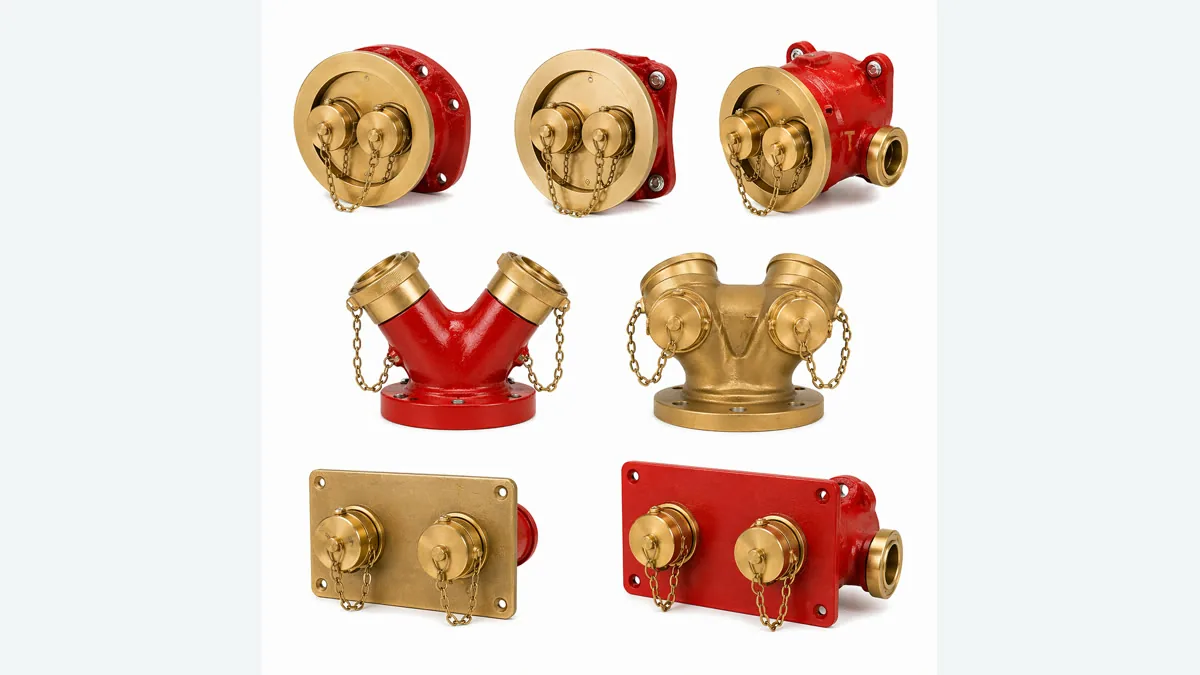
At this quote request checkpoint, confirm that the supplier’s scope covers all wall thicknesses, flange types, and accessories (e.g., escutcheon plates, mounting brackets) specified in your project. Ask: Does your standard fire department connection include the flange and wall plate for a the approved tolerance masonry wall, or are these separate line items? This prevents hidden costs and ensures the assembly fits your site conditions.
Confirm packing and document delivery
Verify that the supplier will provide individual protective packaging for each FDC unit and include a packing list, material certificate, and test report with the shipment. Request a sample of the packing slip and ask: Will the test report be signed and dated by your quality manager? This reduces risk of missing documentation at job site handoff.
- Specify wall thickness and flange orientation in the quote request.
- List all required accessories with part numbers.
- Require a pre-shipment photo of packed units.
- Confirm document format (PDF or hard copy) and language.
Before finalizing the order, ensure the supplier’s quotation includes a line item for packing and documentation. If not, request a separate cost breakdown to avoid surprise charges.
| Requirement | Buyer Verification Question |
|---|---|
| Wall plate thickness | Does your standard wall plate fit a the approved tolerance poured concrete wall? |
| Flange type | Is the flange ANSI Class 125 or 150 as per RFQ? |
| Accessories | Are escutcheon plates and mounting bolts included? |
| Packing | Will each unit be individually wrapped in bubble wrap? |
| Documents | Will the test report be signed and dated? |
By confirming these details, you reduce installation delays and ensure the supplier delivers exactly what you specified.
Issue a comparable supplier RFQ
Before issuing your quote request, confirm that the supplier can provide a signed test report for the exact inlet and outlet thread type (e.g., NST, NH, or NPT) and wall thickness specified in your project drawings. This report is the verifiable proof that the supplier has manufactured your exact configuration before.
- Specify the exact body and trim material (e.g., ductile iron body with bronze trim) and request a material certificate from the foundry. Do not accept generic “equivalent” statements.
- Require the supplier to confirm the minimum order quantity in writing and state whether it applies per SKU or per production run. Ask for a breakdown of tooling and setup costs if the minimum order is not met.
- Request a production risk assessment that identifies the top three failure modes for your FDC design (e.g., thread galling, gasket leakage, coating adhesion) and the supplier’s mitigation steps.
- Ask for a factory execution plan that includes the inspection hold points (e.g., after casting, after threading, after hydrostatic test) and the estimated duration for each stage.
- Define the quote request-to-sample handoff process: require the supplier to provide a sample checklist that matches your quote request line items, and confirm that the sample will be shipped with a signed compliance report.
To standardize comparisons across suppliers, use a simple table to capture the key responses:
| Requirement | Supplier A | Supplier B |
|---|---|---|
| Thread type confirmed | Yes (NST 2.5″) | Yes (NH 2.5″) |
| Material certificate provided | Yes (ductile iron + bronze) | Yes (ductile iron + brass) |
| MOQ in writing | the quoted quantity | the quoted quantity |
| Production risk assessment | 3 failure modes listed | 2 failure modes listed |
After collecting the table, verify that each supplier’s sample matches the quote request line items before placing a production order. This step eliminates ambiguity and ensures the final product meets your catalog products specification.
Source check: Supplemental vs. Supply: Making Sense of FDCs.
Source check: ISO 2859-1 sampling inspection standard; STATE OF MISSOURI DIVISION OF FACILITIES MANAGEMENT, DESIGN AND….
In conclusion
The final approval of your fire department connection supplier comes down to verifying that every quote request line item—inlet and outlet thread standards, body material, trim specifications, installation accessory scope, and signed test report commitments—is documented in the supplier’s quotation and sample approval plan. Compare the quoted cost and minimum order against your project budget and delivery schedule, then validate that the supplier’s quality management system and available test reports cover the exact product configuration you need. Once you have cross-checked these details, you can shortlist the supplier and request a quote for the approved sample, ensuring the production lead time aligns with your installation timeline.
To request a quote for fire department connection, use fire hydrants monitors products to confirm the final specification, quote assumptions, sample approval, QC evidence, approval risk, and supplier follow-up before bulk order.
Frequently Asked Questions
Which dimensions belong in an FDC quotation?
Only if you include the inlet and outlet connection sizes, body length, flange or swivel dimensions, and the exact thread type and pitch for your local fire department connection. Shortlist suppliers who can provide a dimensioned drawing with your quote request so you can verify that the overall assembly fits your standpipe or wall plate before sample approval. Compare the cost impact of non-standard sizes against your project budget, and confirm the minimum order for custom dimensions in the quote request.
How should buyers specify FDC thread requirements?
Buyers should specify the thread standard (NPT, BSP, NH, or local fire service thread), the nominal size, and the thread pitch or TPI directly in the quote request. Check that the supplier’s thread gauge matches your AHJ requirement, and request a thread-certification document or a physical sample for QC verification. Document the thread specification on the purchase order to avoid mismatched couplings at delivery, and confirm the lead time for thread-compatible samples before production.
What documents should accompany an FDC order?
A complete FDC order should include a signed test report covering hydrostatic pressure and flow performance, a material certificate for the body and trim, and a packing list that matches the quote request quantities and dimensions. Verify that the supplier can provide a sample approval sheet with measured thread and dimensional data before you release the order. Request the applicable certification documents on demand, and confirm that the shipping documentation includes the thread type and connection size for customs and site inspection.
quote request handoff: Send Specs for Review.