Monitor enquiries tend to carry a flow rate and little else. Inlet connection type, working pressure, body and nozzle material, coating, and the certification the site requires are all left for the supplier to assume — and each assumption changes the price.
This checklist sets out the data sheet a monitor RFQ needs, and the evidence to ask for against each line of it.
Direct answer: Specify inlet type, flow rate, working pressure, material, coating, and required certifications on one monitor data sheet before sending it out. A monitor quoted from flow rate alone is priced against the supplier’s standard build, not your duty.
Set the procurement decision and approval boundary
Compare this checkpoint against one quote request revision. Each row should identify the requirement, approval evidence, and buyer action before production.
| Requirement | Factory control | Evidence to verify | Order risk | RFQ follow-up |
|---|---|---|---|---|
| Sample approval | Factory holds first-article inspection against RFQ spec before release. | Compare sample dimensions, material, and finish to approved drawing; sign-off required. | Unapproved sample may cause production rework and shipment delays. | Request sample inspection report and approve in writing before production. |
| Material / substrate | Incoming material certificate verified against RFQ grade and standard. | Check mill test report for chemical composition and mechanical properties. | Substituted material can fail corrosion or pressure requirements. | Request material certificate with each lot and cross-check to RFQ. |
| Width or size tolerance | Dimensional check per drawing using calibrated gauges at final inspection. | Measure critical dimensions on three samples per batch; record deviations. | Oversized or undersized parts cause assembly or fit issues at site. | Request dimensional report and approve tolerance range in RFQ. |
| Finish or color control | Visual and gloss check against approved master sample under standard light. | Use color spectrophotometer and compare to RAL or Pantone reference. | Non-uniform finish leads to rejection upon customer inspection. | Request finish sample and color measurement data before shipment. |
| Packing format | Pack per RFQ specification: material, quantity, labeling, and pallet configuration. | Inspect packing list, label accuracy, and pallet stability during loading. | Improper packing causes damage in transit and claim disputes. | Request packing specification and approve packing sample prior to bulk order. |
For fire monitor nozzle, use Set the procurement and approval boundary as the decision scope. Read the rows as one approval sequence. Start with sample approval; use the risk and buyer-action columns to decide whether its evidence is sufficient. Verify it with the inspection method and approval evidence recorded in the table.
For this fire monitor nozzle sourcing record, keep the supplier response, marked sample, and approval owner under the same revision number. If any proof conflicts with the approved record, hold the quote, sample, or production release until the supplier explains the deviation in writing. Before closing the checkpoint, reconcile the latest drawing, sample, quotation, and approval comments, identify which record controls if they disagree, and document the resolution. Carry the signed Set the procurement and approval boundary table into the purchase order and production handoff so the same checks support quote comparison, sample approval, shipment release, and later reorders.
Confirm buyer-owned specifications before supplier review
- Inlet connection type not specified on quote request: Wrong inlet (flanged, threaded, or quick-connect) causes rework and delays. Confirm the exact inlet type and thread standard before supplier review. Buyer's piping diagram or project specification sheet. Document the inlet type on the quote request cover sheet.
- Flow rate and working pressure range missing: Mismatched flow or pressure leads to performance failure or rejection. State minimum and maximum flow (GPM/LPM) and pressure (PSI/bar). Hydraulic calculation or system design document. Verify the values against the project's fire protection plan.
- Material and coating requirements undefined: Corrosion or wear in expected environment shortens service life. Specify body material (brass, stainless steel, aluminum) and coating. Material certificate or coating specification sheet. Request a sample coupon for material verification.
- Certification or standard not listed in quote request: Supplier may quote a non-compliant unit, causing approval failure. List required approvals (CCC, CE, UL test reports) per project scope. Applicable certificate or test report on demand. Request the applicable document before sample sign-off.
- MOQ and lead time assumptions not confirmed: Order quantity or schedule mismatch delays project delivery. Confirm MOQ (e.g., 200 pcs baseline) and lead time (35-60 days production). Supplier's written MOQ and lead time confirmation. Align order quantity and delivery schedule with project milestones.
- What is the exact inlet connection type and size required for this monitor? Inlet mismatch is a common quote request error, causing rework and project delays. Buyer provides a written spec sheet with flanged, threaded, or quick-connect details and nominal diameter. Wrong inlet means the monitor cannot be installed; re-specifying and reordering adds weeks to the schedule. Document the inlet type and size on the quote request cover sheet before sending to any supplier.
- What flow rate and working pressure range must the monitor deliver at the nozzle? Flow and pressure determine nozzle performance and system compatibility; a mismatch can void warranty or fail inspection. Buyer supplies a pump-curve excerpt or hydraulic calculation showing required GPM and PSI at the monitor inlet. Under-specifying flow risks inadequate fire suppression; over-specifying raises pump and piping costs unnecessarily. Verify the flow and pressure values against the site's fire pump capacity and pipe size.
- Which material and coating are required for the monitor body and internal components? Material selection affects corrosion resistance, weight, and service life in the intended environment. Buyer lists the material grade (e.g., marine-grade aluminum, brass, stainless steel) and any coating specification. Wrong material can lead to rapid corrosion, premature failure, and unsafe operation in saltwater or chemical environments. Cross-check the material spec against the site's environmental exposure classification.
- What certification or test-report evidence must accompany the quotation? Certification gaps can block project approval and delay delivery until documentation is provided. Buyer states required certifications (e.g., CCC, CE) or test reports (e.g., hydrostatic, flow curve) and confirms they are available on demand. Missing certification at the quote stage may force a last-minute supplier change or project hold. Request the applicable certificate or test report from the supplier before sample approval.
Required product, project, artwork, packing, and quantity inputs
Before sending the quote request, gather the full set of buyer-owned specifications: inlet type, flow rate, working pressure, material, coating, and required certifications. Also confirm artwork, packing format, and quantity. Missing any input forces the supplier to guess, which increases the risk of a non-compliant quote or sample. This step is standard practice when sourcing building commercial fire protection solutions.
Items that must remain quote- or approval-dependent
Keep final MOQ, lead time, and exact pricing as quote-dependent variables. Do not lock these into the quote request as fixed requirements. The supplier needs the complete specification set to provide accurate numbers. Similarly, certification documents and test reports should be requested on demand after the quote is reviewed. This approach avoids premature commitments and keeps the process flexible.
quote request checkpoint
Build the fire-monitor RFQ data sheet
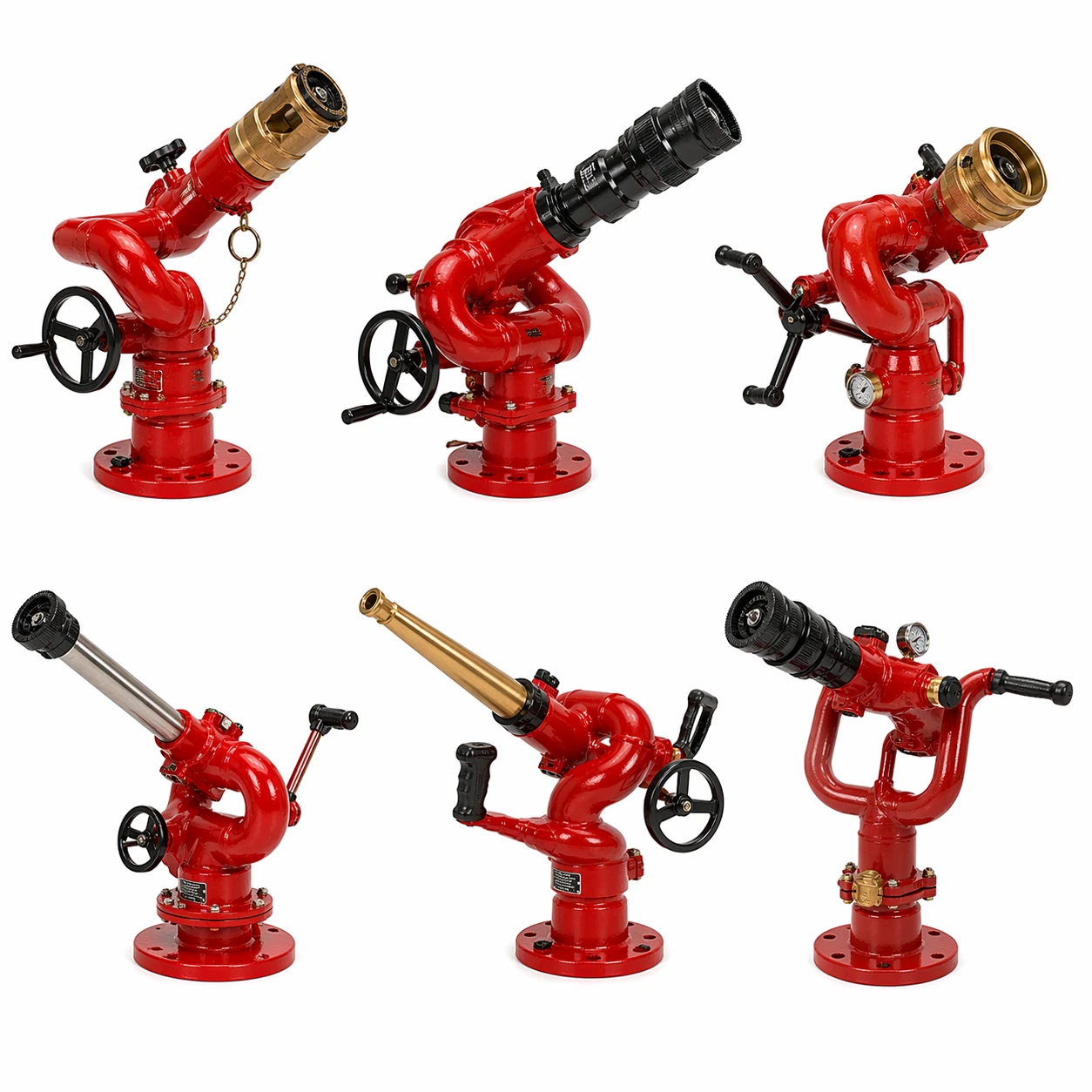
For fire monitor nozzle, treat the listed items as quote request inputs. Match each buyer input to written supplier confirmation, approval evidence, and the risk that would hold the quote.
- Confirm the minimum order quantity (minimum order) and whether it applies per model or per mixed order. minimum order affects total cost, inventory holding, and whether you can order a single test unit. Minwen Fire standard products have a baseline minimum order of 200 pcs, negotiable by configuration and certification. You may be forced to over-order or pay a premium for a small lot. State your required quantity in the quote request and ask for a written minimum order breakdown.
- Request the standard production lead time and the sample lead time separately. Lead time drives project scheduling, payment milestones, and installation readiness. Minwen Fire sample lead time is 15–20 days after confirmation; production is 35–60 days. Delays in sample approval can cascade into missed project deadlines. Add a required delivery date to the quote request and ask for a lead-time commitment.
- Identify the primary cost driver: material, certification, or custom tooling. Knowing the cost driver lets you negotiate or substitute without sacrificing performance. Stainless steel construction and CE certification add cost; brass is a lower-cost alternative. You may approve a quote that includes hidden surcharges for non-standard specs. Ask the supplier to itemize the quote by material, certification, and tooling.
- Specify the quality control steps: pressure test, flow test, and material certification. QC evidence ensures the nozzle meets the stated performance and safety standards. Request a factory test report for each unit or a batch certificate of conformance. You may receive units that fail on-site, causing rework and safety liability. Include a QC clause in the quote request requiring test reports with each shipment.
Compare options and record open assumptions
When reviewing supplier quotes, list each option's flow, pressure, material, and certification side by side. Note any assumptions you made, such as ambient temperature or pipe thread type. These assumptions become approval gates later. If a supplier's quote deviates from your assumptions, flag it before sample sign-off.
Name the owner and status of every exception
Every deviation from the quote request data sheet needs a named owner and a status: approved, pending, or rejected. For example, if a supplier offers a brass nozzle instead of stainless steel, the buyer's engineer must approve the material change. Track these exceptions in the quote request log so no unapproved substitution reaches the production line.
Use fire sprinklers alarm valves products to align the related specifications and quote request inputs.
Request supplier evidence without assuming capability
| Cost driver | What changes it | Quote signal | Risk to avoid | Buyer action |
|---|---|---|---|---|
| Material grade and wall thickness for the monitor body and internal trim | Specifying stainless steel over brass or aluminum increases raw material cost and machining time | Supplier asks for the intended operating pressure and media type before quoting | Accepting a lower-cost alloy without verifying corrosion resistance for the application environment | Request a material certificate with the quote and confirm the grade matches the RFQ |
| Inlet connection type and size (flanged, threaded, or quick-connect) | Flanged inlets require additional machining and gasket materials versus threaded connections | Supplier provides separate line items for the base monitor and the inlet adapter kit | Ordering a monitor with an inlet that does not match existing piping, causing field rework | Verify the inlet dimension and standard (ANSI, DIN, or JIS) on the quote before sample approval |
| Minimum order quantity for the first production run | A lower MOQ reduces upfront investment but may increase per-unit price and setup charges | Supplier states a baseline the MOQ confirmed in the RFQ for standard models and negotiates for mixed orders | Committing to a high MOQ without confirmed end-user demand or project timeline | Confirm the MOQ in writing and ask if a pilot run of the quoted quantity is possible for field testing |
| Lead time for sample and bulk production | Sample lead time of 15–20 days versus production lead time of 35–60 days after spec confirmation | Supplier provides separate lead-time estimates for sample approval and serial production | Assuming sample approval and bulk production run concurrently, causing schedule gaps | Document the sample review period and production start date in the purchase order |
| Quality control documentation and third-party test reports | Requesting a hydrostatic test report or material certificate adds administrative cost per batch | Supplier offers test reports on demand and includes CCC and CE documentation for all product families | Skipping document verification and receiving units that do not meet local approval requirements | Request the applicable test report and certificate with the quote, and verify the document scope |
For material grade and wall thickness for the monitor body and internal trim, a poor decision can mean accepting a lower-cost alloy without verifying corrosion resistance for the application environment. Request written proof and compare it with the approved sample or specification.
For about us, preserve the material grade and wall thickness for the monitor body and internal trim decision under one revision number: keep the supplier response, marked sample, approved specification, quotation, and approval owner together. If the evidence conflicts with the approved record, hold the quote, sample, or production release until the deviation is explained in writing. Once the buyer and designated technical authority have accepted the evidence, carry the signed Request supplier evidence without assuming capability record into the purchase order, production handoff, shipment release, and later reorder review so every team works from the same baseline.
Sample, document, and production-record requests
Ask the supplier to include a material certificate, hydrostatic test report, and dimensional report with the sample. These documents confirm the nozzle meets your quote request specs before production begins. Without them, you risk approving a sample that does not match the quoted cost drivers. A written approval gate tied to these records prevents rework and keeps the project on schedule. Learn more about this process on our about us page.
Review quote or sample evidence before approval
For fire monitor nozzle, this section converts review quote or sample evidence before approval into quote request inputs, supplier evidence, approval risk checks, and the next sample or quote decision.
Acceptance points and unresolved risks
At this process checkpoint, the buyer must have a completed quote request data sheet and at least one supplier quote with supporting evidence. Before moving to production, confirm the following acceptance points and unresolved risks.
- Specs and cost alignment: Verify that the quoted fire monitor nozzle matches your quote request inlet size, mounting type, flow rate, and material. Any deviation must be documented with a cost impact note.
- minimum order and production risk: Confirm the minimum order quantity and whether the supplier can meet your required lead time. Flag any production constraints, such as limited raw material availability or tooling setup delays.
- Factory execution evidence: Request sample photos, test reports, or a video of the nozzle operating at the specified pressure. Cross-check the sample against your quote request data sheet.
- quote request and sample handoff: Ensure the supplier has acknowledged all quote request line items in writing. If a sample was provided, document its acceptance or rejection with clear reasons.
Use the table below to track key decision points before final approval.
- Specs and cost: Quote with itemized costs; Pending
- minimum order and lead time: Supplier confirmation; Pending
- Sample test results: Test report or video; Pending
- quote request acknowledgment: Signed quote request response; Pending
Resolve any unresolved risks before proceeding to the next stage. For more guidance, see our catalog products.
Freeze changes for bulk production or repeat orders
for this order, this section converts freeze changes for bulk production or repeat orders into quote request inputs, supplier evidence, approval risk checks, and the next sample or quote decision.
Version, sample, SKU, and packing change control
Without a frozen specification, a bulk order can drift from the approved sample, leading to rejected shipments and costly rework. To prevent this, confirm that every quote request input—inlet type, flow range, working pressure, material—is locked before production. Ask your supplier: “Will you produce exactly to the signed-off sample and SKU code, with no substitution unless a written change order is issued?” This question forces a clear change-control process, covering version tracking, sample retention, and packing consistency. For repeat orders, verify that the same SKU triggers the same bill of materials and packaging; any deviation should require a new sample approval. A simple table can document the freeze points:
| Control Point | Buyer Verification Question |
|---|---|
| Version | Is the spec sheet version number the same as the approved sample? |
| Sample | Do you hold a sealed reference sample matching this SKU? |
| SKU | Does the SKU code map to a single, frozen BOM? |
| Packing | Is the packing method (carton, pallet, labeling) documented and unchanged? |
By enforcing these verification steps at the quote request stage, you eliminate ambiguity in factory execution and ensure that bulk production mirrors the approved handoff. This reduces commercial risk and keeps repeat orders predictable.
Prepare a comparable RFQ and handoff record
At this stage, you must have a completed quote request data sheet that includes all buyer-owned specifications verified against your system requirements. Before sending to the supplier, confirm that the inlet connection type (flanged, threaded, or quick-connect) matches your existing piping, and that flow rate and working pressure are within the fire hydrants monitors products’s rated range. The output of this stage is a single quote request document that can be handed off for quotation and sample review.
Buyer inputs to send to the supplier
- Inlet connection type and size (e.g., the approved tolerance NH threaded)
- Required flow range (e.g., 200–500 GPM) and working pressure (e.g., 100–the buyer-approved test threshold)
- Material specification (brass, stainless steel, or aluminum)
- Mounting type (fixed, portable, or deck-mount) and any dimensional constraints
- Project data such as application (industrial, marine, municipal) and environmental conditions
Use the table below to match each buyer input to a supplier verification question that must be answered before the quote request is finalized.
| Buyer Input | Supplier Verification Question |
|---|---|
| Inlet connection type | Does the nozzle have the specified inlet thread or flange standard? |
| Flow range and pressure | Can the nozzle deliver the required flow at the stated pressure without exceeding rated limits? |
| Material | Is the nozzle body made from the requested material with corrosion resistance for the environment? |
| Mounting type | Does the mounting bracket or base match the installation surface and orientation? |
| Project data | Are there any additional certifications or testing reports needed for the application? |
After the supplier confirms each item, attach the quote request data sheet and project specifications to a handoff record. This record should include the quote request number, date, buyer contact, and a checklist of all verified inputs. The handoff record becomes the reference for sample evaluation and production approval.
Buyer questions about fire monitor nozzle RFQ checklist
for the current product, this section converts buyer questions about fire monitor nozzle quote request checklist into quote request inputs, supplier evidence, approval risk checks, and the next sample or quote decision.
What must be confirmed before quotation?
Before requesting a quotation, verify that the inlet connection type (flanged, threaded, or quick-connect) matches your existing piping. Confirm the required flow rate in GPM or LPM and the working pressure range. Provide the intended mounting style (fixed, portable, or deck mount) and the material specification (brass, stainless steel, or aluminum). This evidence ensures the supplier can deliver a nozzle that fits your system without rework.
- Inlet connection type and size
- Flow rate and working pressure
- Mounting style and material
- Any required approvals (e.g., UL, FM)
What evidence belongs in sample approval?
Sample approval requires documented proof that the nozzle meets your specifications. Request a dimensional report verifying inlet and outlet dimensions, a pressure-flow curve showing performance at your stated pressure, and material certification (e.g., mill test report for stainless steel). Include a photo of the sample with a ruler for scale and a written statement from the supplier confirming compliance with your quote request inputs.
| Evidence Type | What to Verify |
|---|---|
| Dimensional report | Inlet size, overall length, mounting bolt pattern |
| Pressure-flow curve | Flow rate at specified working pressure |
| Material certification | Grade and composition of metal used |
| Photo with scale | Visual confirmation of design and finish |
Review these documents before approving the sample to avoid production delays. If any evidence is missing, request it before moving to the buyer follow-up.
Conclusion and next procurement action
With your quote request checklist complete, the practical decision is to verify that every critical spec—inlet type, flow range, material, and certification requirement—is documented in a single request for quotation. Compare supplier responses against your baseline parameters, and shortlist only those that provide dimensional reports, material certificates, and test evidence on demand. Approve a sample only after the submitted data matches your checklist, then proceed to lock in lead time and minimum order terms. This structured handoff reduces production risk and ensures the quoted fire monitor nozzle meets both project and compliance expectations.
To request a quote, visit fire hydrants monitors products and confirm the final specification, quote assumptions, sample approval, QC evidence, approval risk, and supplier follow-up before bulk order.
Fire monitor nozzle rfq FAQ
What should a buyer confirm for fire monitor nozzle rfq?
Confirm the inlet type (flanged, threaded, or quick-connect), flow rate, working pressure, material (brass, stainless steel, or aluminum), and nozzle pattern (straight stream, fog, or adjustable). Document these specs in the quote request so the supplier can quote accurate cost and minimum order, and request a dimensional drawing with the sample for verification.
What evidence should a supplier provide for fire monitor nozzle rfq?
Request a material certificate, a hydrostatic test report, and a dimensional report for the sample. For certification, ask for the applicable CCC or CE document on demand; do not assume model-level coverage without reviewing the certificate. Compare the sample against your quote request specs before approving production.
How should changes be recorded before production or reorder?
Document any specification, material, or dimensional change in a written revision log and share it with the supplier before bulk production. For reorders, verify that the approved sample and QC records match the new batch, and confirm lead time (typically 35–60 days after specs are finalized) and minimum order with the supplier.
What should buyers verify before approving fire monitor nozzle rfq?
Verify that the sample matches the quote request specs, including inlet type, pressure rating, and nozzle pattern. Check the material certificate and hydrostatic test report, and confirm that the supplier can provide the required certification documents on demand. Approve only after the sample passes your dimensional and functional checks.
Are there any safety mechanisms in place to prevent excessive flow or pressure?
Some fire monitor nozzles include a pressure-regulating or flow-limiting mechanism, and the design varies by model. Ask the supplier for a pressure/flow curve and a description of the safety feature in the sample approval documentation. Confirm the maximum working pressure and any built-in relief or shut-off function in the quote request.
quote request handoff: Send Specs for Review.
Source check: order form; Fire Suppression Submital Checklist; quote request Template.