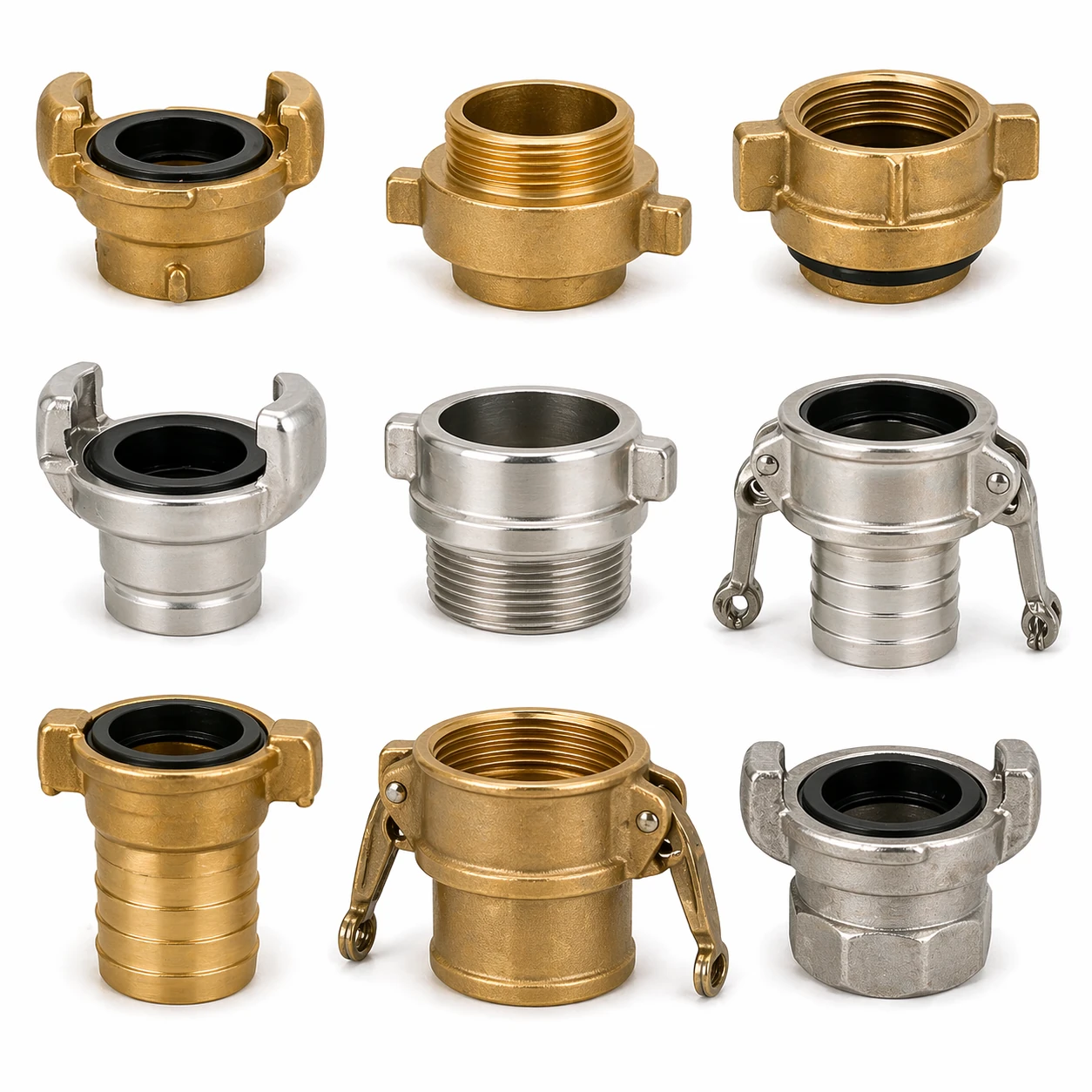
fire hose coupling thread mismatch is the first checkpoint buyers should lock before they approve a supplier, budget, or production slot. The thread profile, not the hose or the nozzle, is a frequent cause of returns. A 2.5 inch fire hose coupling that mismatches the local hydrant or standpipe connection turns a profitable container into dead stock sitting in a warehouse.fire hose couplings
A distributor consolidates suppliers without checking thread standards — that’s when the problems start. You order NH couplings for a US project and BSP for the Middle East, but the factory runs the same thread profile on everything. Or you stock male/female threaded couplings when a single Storz variant covers both connections. The fix is simple: work with a supplier who knows NFPA 1962 coupling requirements and verifies compliance before the container seals.

Commercial Coupling Thread Types
Thread mismatch is a common cause of dead stock for international distributors. There are only four standards you need to know, and mixing them without adapters is a guaranteed audit failure.
The global fire market runs on four thread profiles. NH (National Hose) is the US standard — 7.5 threads per inch on 1.5″, 2.5″, and 5″ diameters. NPSH looks identical to NH but uses a different thread angle. Connect them, and it cross-threads under pressure. BSP (British Standard Pipe) dominates the UK, Australia, and parts of the Middle East with a 55-degree thread angle versus the US standard 60 degrees.
Storz is the odd one out. Sexless connection with locking lugs and an integrated gasket. No male or female ends needed. This is the standard for European municipal systems and large-diameter supply lines from 4″ to 6″. Ship a mixed container with NH couplings on the hose and Storz on the hydrant adapter, and the whole assembly is non-functional until someone finds the right adapters.
A 2.5 inch fire hose coupling stamped NH must pass a Go/No-Go gauge test at 7.5 TPI. If the pitch drifts by 0.005″, the coupling binds during connection and fails a municipal hydrostatic test. Any supplier should provide thread gauge certification photos before you commit to a container.
Here’s the practical rule for international sourcing. If your customer base spans multiple regions, standardize on Storz for the hose ends and stock a small set of NH-to-Storz or BSP-to-Storz adapters. This cuts SKU count by half and the hose is never the bottleneck during an inspection.
| Thread Type | Standard / Region | Key Specs (2.5″) | Connection Speed | Compliance & Inventory Impact |
|---|---|---|---|---|
| NH (National Hose) | USA / NFPA 1962 | 7.5 TPI, male/female | 15+ seconds | Municipal code compliant; requires male & female SKUs |
| NPSH (National Pipe Straight Hose) | USA / Industrial | 11.5 TPI, straight thread | 15+ seconds | Common on hydrants; needs adapters for NH hose |
| Storz (Sexless) | Europe, Large-Diameter / NFPA 1962 | Symmetrical lugs, 3-second lock | ~3 seconds | Cuts inventory SKUs by 50%; passes municipal audits |
| BSP (British Standard Pipe) | UK, Asia, Middle East | 14 TPI, parallel or tapered | 15+ seconds | Requires dedicated adapters for NH/Storz systems |
Storz vs Threaded Coupling Costs
Stocking Storz couplings cuts SKU count by 50% and connection time by 80%. The math on total landed cost favors Storz for any distributor managing mixed containers.
Sure, there’s a unit price gap on Storz. A precision-machined Storz coupling with symmetrical locking lugs and an integrated gasket costs more to produce than a standard threaded NH coupling. No argument there. But your real cost isn’t the unit price—it’s inventory carrying costs and how fast your crews can get water on the fire.
Think about the SKU math. A threaded NH system forces you to stock male and female couplings as separate line items. For 1.5-inch, 2.5-inch, and 5-inch sizes, that’s six SKUs just for the ends. A Storz system needs only three—one per diameter—because the connection is sexless. For an international distributor shipping mixed containers, cutting coupling SKUs by half means lower warehousing costs and less cash tied up in slow-moving stock.
Now factor in deployment speed. A fire crew connects a Storz coupling in about three seconds. Threaded NH takes 15 seconds or more. In a high-rise standpipe operation, that gap isn’t academic. For your customer—the municipal fire department or the building project manager—faster connection means faster water on the fire. That’s a spec you can sell on.
- SKU Reduction: Sexless design cuts coupling SKUs by 50%. Six SKUs become three for three diameters.
- Storz connects in 3 seconds. NH threaded couplings take 15 seconds or more. That difference adds up fast on a busy scene.
One more point that rarely appears in the manufacturer brochures. Storz couplings eliminate the “gender mismatch” problem on the truck. A firefighter grabbing a male threaded coupling to connect to another male threaded fitting is a dead end. That scenario cannot happen with Storz. For your customer, that means less frustration and faster setup. For you, it means fewer returns and less technical support time explaining why their order didn’t connect.
| Cost Factor | Storz Coupling | Threaded Coupling (NH/NPSH) | Impact on Distributor Inventory |
|---|---|---|---|
| Unit Price (2.5″) | Higher (precision-machined lugs) | Lower | Storz has a higher upfront cost per unit. |
| SKU Complexity | 1 SKU (Sexless) | 2 SKUs (Male + Female) | Storz cuts inventory carrying costs. |
| Connection Time | ~3 seconds | ~15+ seconds | Storz reduces labor time by 80% in field deployment. |
| Adapter Requirement | None (universal mate) | Requires adapters for mixed-thread systems | Storz eliminates adapter dead stock and compatibility failures. |
| Compliance Risk | Low (standardized lugs) | High (thread mismatch = inspection failure) | Storz removes thread-mismatch failures on municipal code audits. |
NFPA 1962 Inspection Standards
Commercial fire hose couplings must sustain a minimum service test pressure of 250 PSI (17 bar) and match strict municipal thread profiles like NH, NPSH, or Storz to pass inspection. Stocking sexless Storz couplings cuts inventory carrying costs by eliminating male/female SKU variants.
Consumer-grade garden hose repair tutorials are everywhere online. Those rubber gaskets will catastrophically fail under 13+ bar commercial pressures, causing distributors to fail NFPA 1962 audits. If you are sourcing 2.5 inch fire hose coupling specs for a mixed container, knowing which thread profile to match is the difference between passing inspection and dead stock.
- NH (National Hose): Standard in the US, 7.5 threads per inch for 1.5″ and 2.5″ diameters. Commonly found on American fire hydrants and standpipe outlets.
- NPSH stands for National Pipe Straight Hose. It has the same thread count as NH but uses a different pitch angle. They won’t connect without an adapter. You’ll mostly find NPSH in older municipal systems.
- Storz is a sexless design. No male or female threads, just a symmetrical locking lug. It dominates European markets and large-diameter (5″) municipal applications. Connection time? About 3 seconds. Compare that to 15+ seconds for threaded NH.
- BSP runs 14 threads per inch. It’s standard in the UK, Australia, and parts of Asia. It will not connect to NH or NPSH without a dedicated adapter. Simple as that.
Mixing NH, NPSH, and BSP in the same container without adapters creates real audit anxiety in the field. One fire marshal inspection spots the mismatch, and you’re looking at a costly re-ship order. The safe play is to specify NFPA 1962 fire hose coupling standards for all threaded orders. For any new large-diameter deployment, go with Storz to future-proof your inventory.NFPA 1962 fire hose coupling standards
The upfront machining cost of Storz couplings is higher than threaded NH. No question. But the total cost of ownership flips hard once you run the SKU math. A threaded inventory typically needs four SKUs: male 2.5″, female 2.5″, male 1.5″, female 1.5″. Storz replaces all four with one SKU. For a distributor managing a mixed 40-foot container, that cuts carrying costs. It also eliminates the risk of ordering the wrong gender. Precision-machined symmetrical locking lugs and integrated gaskets also kill cross-threading damage — a hidden expense that shows up in field repairs.
NFPA 1962 requires annual inspection of coupling gaskets, shanks, and swivel rings. Swivel rings can pass visual dry-connect tests but blow out under pressurized service tests. The ring looks intact, but micro-cracks or wear on the bearing surface cannot be seen until 250 PSI is applied. Low-tier manufacturers often hide non-standardized gasket seats that make field replacement impossible. When you source municipal code compliant hose couplings, demand full pressure test documentation. Make sure the gasket seat matches industry-standard dimensions — for example, a 2.5″ Storz gasket ID of 3.250″.municipal code compliant hose couplings
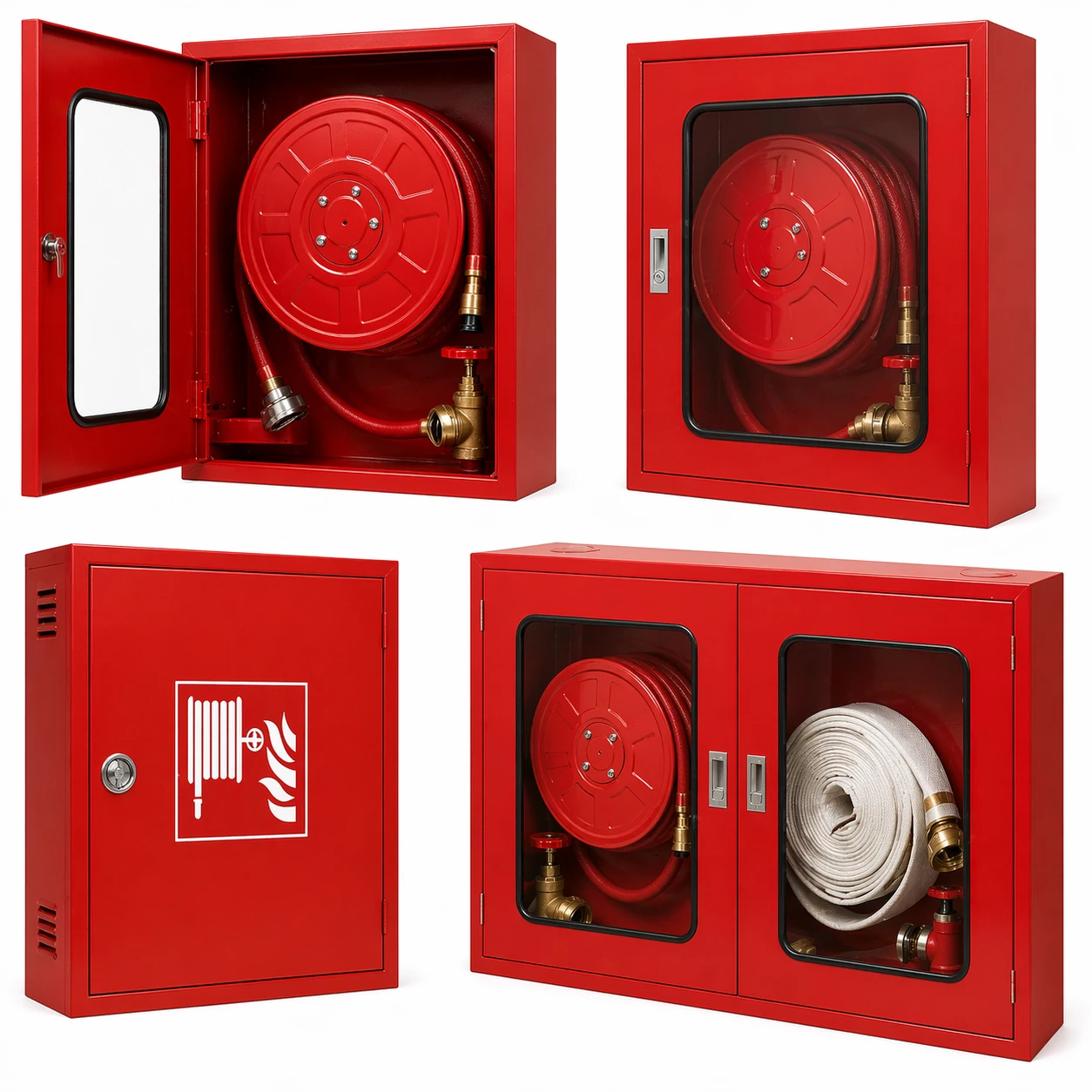
NYC Code 2727 is brutal. It dictates exact specs for 2-1/2″ hose rack assemblies — hose length, coupling thread, rack dimensions, all locked in. Pre-configured kits like the NYC 2727 series bundle the hose, coupling, rack, and valve under one part number. Distributors shipping these assemblies dodge fire marshal rejections because the system arrives compliant.
Two ways to attach a coupling to a hose jacket: hydraulic crimping or swaging. Crimping uses segmented dies to compress the shell onto the jacket. Swaging forces a continuous ring over the coupling shank. Both need precise pressure — too low and you get leaks at 17 bar; too high and the lining tears. Field replacement means specialized shop machinery. For wholesale orders of factory-attached couplings, pre-assembled hoses are the safer bet — the crimp cycle is controlled and logged under ISO 9001.
The main standards are NH (National Hose), NPSH (National Pipe Straight Hose), Storz (sexless symmetrical), and BSP (British Standard Pipe). NH is the US default. Storz dominates European and large-diameter municipal work.
Commercial fire hose couplings hold a minimum service test pressure of 250 PSI (17 bar), with burst pressure typically over 500 PSI. Anything below that violates NFPA 1962. Don’t use consumer-grade fittings here.fire hose couplings
A coupling is crimped or swaged onto the hose — permanent. An adapter is removable, threaded onto the coupling to change size, gender, or thread type so it mates with non-standard hydrants or pumps.
Storz couplings need precision-machined locking lugs and integrated gaskets. But they cut connection time from 15 seconds down to 3 seconds and kill the need for male/female stock. That upfront cost gets eaten fast.
Yes — you can replace just the coupling, assuming the hose jacket and liner are still in good shape. It takes a hydraulic crimping machine to seat the new shank inside the jacket and lock it down. That costs a fraction of replacing the whole hose assembly.

Municipal Code Compliance (NYC 2727)
NYC Code 2727 is one of the toughest municipal hose rack standards anywhere. It locks in the exact 2-1/2″ coupling thread (NH), hose length (usually 75 or 100 feet), rack dimensions, and valve layout. Miss the thread profile by even one pitch, and the fire marshal flags the entire assembly.
Pre-configured hose rack assemblies ship the hose, coupling, rack, and valve as a single unit. That means the distributor doesn’t have to hunt down components from three different suppliers. One mismatched piece kills the audit pass rate.
For international distributors, pre-bundling also speeds up customs clearance. One HS code for a complete hose rack assembly moves through customs faster than a mixed container of loose hose, couplings, and adapters — each with a different classification. If you’re shipping to the US or any city with similar codes (Chicago, Los Angeles, London), pre-bundled assemblies are the faster, safer route.

Crimping vs Swaged Attachment Methods
Four thread profiles govern global fire hose compatibility. Mixing them in a single container without adapters guarantees dead stock and failed inspections.
NH — National Hose — is the standard thread profile across the United States. It’s a tapered thread with a 75° included angle, commonly found on 1.5-inch, 2.5-inch, and 4-inch diameters. NPSH (National Pipe Straight Hose) looks similar but has a different pitch and a straight profile instead of tapered. Distributors often treat them as interchangeable all the time. They’re not. An NH male coupling will cross-thread an NPSH swivel and seize under pressure.
BSP (British Standard Pipe) threads dominate the UK, Australia, and parts of the Middle East. The thread angle is 55° — compared to NH’s 75° — and the pitch is different across every common diameter. Distributors shipping to Dubai or Singapore with NH-terminated hoses end up sitting on a container of incompatible stock. Adapters exist, but each one adds a failure point and extra inspection scrutiny.
Storz is the outlier — zero threads, no male or female ends. Just interlocking lugs and a rubber gasket face. European fire departments standardized on it decades ago for a reason. A Storz connection takes about 3 seconds. A threaded NH connection takes 15. Here’s what that means for your warehouse: you carry one SKU per diameter, not separate male and female stock. Any Storz coupling mates with any other Storz coupling of the same size.
- NH (National Hose): 75° thread angle, tapered. The US standard. Common on 1.5″, 2.5″, and 4″ diameters. If you’re sourcing fire hose couplings for the North American market, this is your baseline.
- NPSH (National Pipe Straight Hose): Looks almost identical to NH. Same diameter, same visual profile. But the threads are straight, not tapered. Mix the two together and you get cross-threading and swivel lock-up. That’s a failed NFPA 1962 coupling test before you even hit the hydrant.
- BSP (British Standard Pipe): 55° thread angle. Available in parallel or tapered variants. The standard across the UK, Australia, and the Middle East. It is completely incompatible with NH and NPSH. A BSP male will not seal on an NH female — the thread pitch difference alone guarantees a leak.
- Storz: Sexless symmetrical lugs with an integrated gasket. No male/female variants needed. Connection time sits under 3 seconds. This is the go-to for European municipal rigs and large-diameter supply lines.
Here’s the most common screw-up observed. A distributor loads a 40-foot container with hoses from two different factories — 2.5-inch NH hoses from supplier A, 2.5-inch NPSH adapters from supplier B. The threads look similar to a rookie inspector. But NFPA 1962 coupling requirements catch it on visual inspection every time. The buyer rejects the shipment. You eat the return freight and the restocking charge. The fix is simple: pre-bundle by thread type, or switch your whole standard to a single profile like Storz. That drops your compatibility risk to near zero.
Specifying sexless Storz couplings across your entire order cuts inventory carrying costs. No male SKUs, no female SKUs, no adapter SKUs. One coupling type covers every connection in the system. If your buyers require NH or BSP terminations at the hydrant end, a single adapter per hose solves it without complicating your warehouse. That is how you lower cost-per-assembly on mixed orders.
Conclusion
Specifying the correct fire hose coupling thread type and pressure rating is the first step to passing municipal code audits. Reject consumer-grade gaskets and inspect swivel rings under service pressure, not just visually. This approach eliminates dead stock and lowers cost-per-assembly for mixed orders.
Review your current inventory against NFPA 1962 standards and NYC Code 2727 specs. Contact us for bulk pricing on pre-configured assemblies that match your target thread profiles.
Frequently Asked Questions
What are the standard fire hose coupling thread types?
The four standard thread profiles are NH, NPSH, BSP, and Storz, each dominant in specific regions. Using the wrong thread is a common cause of dead stock for distributors. Match threads to your local fire code before ordering.
How much pressure can a fire hose coupling hold?
Commercial fire hose couplings must hold a minimum service test pressure of 250 PSI (17 bar) per NFPA 1962. Some couplings exceed 400 PSI, but the hose’s rating is often. Always verify the coupling’s pressure rating matches your hose and pump output.
What is the difference between a coupling and an adapter?
A coupling connects two hose ends or a hose to a nozzle, while an adapter converts between different thread standards. Adapters solve mismatch problems but add an extra potential failure point. Use adapters only temporarily; standardize couplings for reliability.
Why do Storz couplings cost more than threaded?
Storz couplings require more precise machining for their symmetrical sexless lugs, raising unit cost. They cut connection time by 80% and reduce inventory SKUs by half, offsetting the upfront price. Calculate total lifecycle cost before dismissing Storz as too expensive.
Can you replace just the coupling on a fire hose?
Yes, you can replace a damaged coupling, but it must be done with NFPA 1962-compliant crimping or expansion and a matching thread profile. Field repairs without proper tools void the. Always have replacement done by a certified shop to maintain code compliance.