Qualifying a fire equipment manufacturer in China is the first checkpoint to clear — before you approve a supplier, a budget, or a production slot. Sourcing fire protection equipment from China cuts costs, but only if the supplier delivers what’s promised. The real risk? Any operation can list products online. The qualification process separates a genuine manufacturer from one that can’t back up its claims. Here’s what years of B2B procurement experience taught me — focus on verifiable documents, production discipline, and measurable quality checks. Ask yourself: does this supplier’s production actually match their paperwork, or are they just saying what you want to hear?

Why Qualification Is Non-Negotiable in Fire Equipment Sourcing
Fire safety gear fails in life-critical moments. Skip due diligence, and two patterns repeat. First, certification claims that don’t match the actual products shipped. Second, production and post-sale issues that only surface after payment clears. The real cost — customs delays, product recalls, warranty disputes, and reputation damage in regulated markets. A standard question we get from buyers: what happens when the certificate doesn’t cover the model that actually ships? Answer — you eat the loss. The fix is verifying at the model level, not the brand level.
Three failure patterns keep coming up. Certification mismatch — a supplier says “CE certified” but the actual model series shipped isn’t covered. Production capacity inflation — the factory overstates output and subcontracts the work, quality control goes out the window after the deposit hits. Post-sale silence — no lab test reports available when you need them. The fix is straightforward: demand model-specific certifications, transparent capacity data, and accessible technical documentation before a single container is packed. you can sort it out after payment? That’s how the pros get burned.
Certifications and Their Real-World Coverage: CCC vs. CE vs. ISO 9001
Two certification systems dominate Chinese fire equipment — CCC (China Compulsory Certification) and CE (EU Conformity marking). Both are enforceable, but both get misrepresented without proper diligence. CCC is model- and spec-specific. A factory might hold CCC for a 1 kg dry powder extinguisher but have zero coverage for a 6 kg CO2 model. CE requires a Declaration of Conformity backed by actual test reports from an accredited lab. When a supplier says “they have CE,” the next question is: which model numbers does that certificate list? ISO 9001 drives consistent processes — but verify the certificate number through the certifying body’s registry. Their word should not be taken for it.
Ask for certificates tied to the specific products in your order. Collect the certificate number, issuing body, validity period, and the exact scope of covered models and specifications. For ISO 9001, check the registry entry directly with the certifying body. The goal is simple — confirm that the actual SKUs, configurations, and performance requirements you’re buying align with what’s covered on paper. That alignment kills the risk of non-conforming goods, even when the documentation looks solid at first glance.
The 10-Point Qualification Checklist
Ten field-tested checkpoints to separate a capable fire equipment manufacturer from one with gaps in qualification. This is not generic advice — it’s model-specific and actionable. Use it to evaluate a supplier’s documentation package against the exact SKUs you’re sourcing. about skipping steps? Don’t. Every experienced buyer has a story about the one detail they missed.
- A lot of buyers skip the first step—checking if the supplier is actually a manufacturer. Pull their business license and match the corporate name to the export docs. Then confirm their registered scope says “manufacturing,” not just “trading.” Run their registration number through gsxt.samr.gov.cn. If the status shows anything other than “active,” stop right there.
- Certificates get faked more often than you’d think. Always request the specific certificates for the products you’re ordering. Write down the certificate number, the issuing body, the validity period, and which models it covers. For ISO 9001, go to the certifying body’s registry and plug in the number. Then cross-check that the certification actually covers the exact SKUs in your order.
- A CE certificate on a brochure means nothing unless it maps to your specific model. A certificate might cover one sprinkler head at a certain temperature rating—order a different variant and the coverage is void. Demand a certificate scope table that lists every model number and configuration the certificate actually covers.
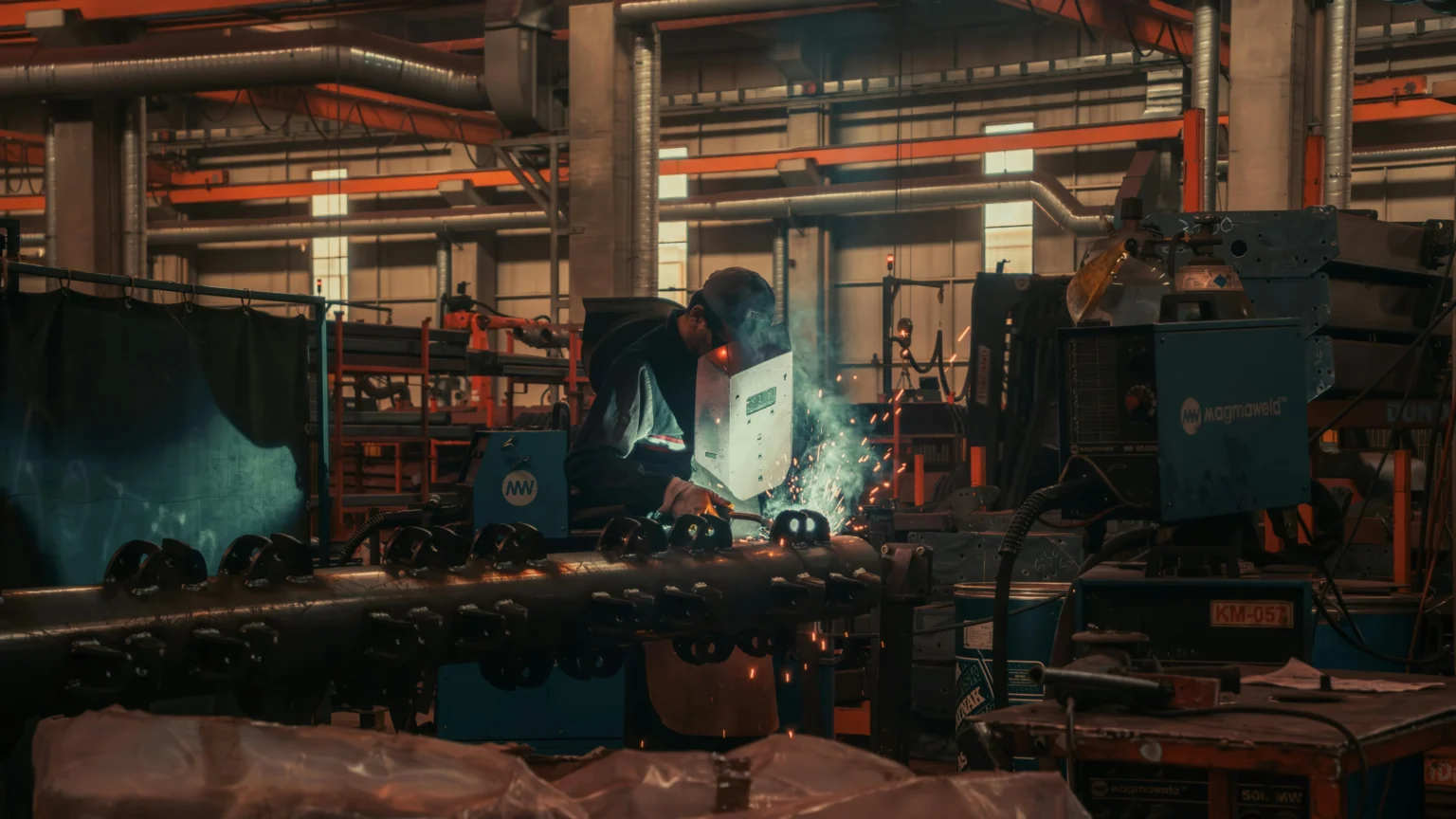
- Walk the production floor and count the actual lines dedicated to your product category. A supplier claiming 20 lines might dedicate only 2 to fire extinguishers — the rest run automotive parts. Cross-check their claimed monthly output against factory space and batch cycle times. Ask who handles component manufacturing: is the valve body cast in-house or bought from a foundry 200 km away? Then pin down the real MOQ — not the sales sheet number, but the batch size that keeps the line running profitably. That number tells you if they’ll take a 500-unit trial or need 2,000 pieces to bother.
- A mature QC system has three checkpoints: incoming material inspection (IQC) verifies raw steel thickness and chemical agent purity before anything hits the floor. In-process control (IPQC) catches weld porosity or valve assembly gaps mid-production. Final outgoing inspection (OQC) runs functional tests on every unit — discharge time, pressure hold, thread gauge fit. Ask for their AQL sampling plan and acceptance criteria per model. Generic “we check quality” means nothing. Model-specific inspection routines prove the system is real.
- A UL or CE certificate proves the product passed a single test on a specific date. That tells you the past, not the recurring batch quality. For ongoing verification, demand third-party lab reports from SGS, Intertek, TÜV, or BV — issued within the last 12 months. Fire extinguishers need discharge time, throw range, pressure retention, and valve seat leakage tests. Sprinklers require activation temperature calibration and water distribution pattern tests at rated flow. If the lab report dates align with your production timeline, you have reliable coverage. If the latest report is three years old, the factory is coasting on old paperwork.
- Stop thinking of an export track record as a yes-no box to tick. Here’s the dirty truth: any supplier can list “exported to 20 countries.” The real question is whether any of those exports repeated — meaning, did those buyers reorder? When you call the reference, ask specifically about customs holds and how the supplier handled them. How they answer that tells you more than any brochure will.
- Evaluating documentation standards is where most buyers drop the ball. The discipline behind a clean proforma invoice isn’t just billing — it’s clearing customs without a hold. Verify they can issue a Certificate of Origin and match HS codes to your local tariff schedule. If you’re thinking “it’s just paperwork,” you haven’t had a container stuck at the port for 3 weeks. That is exactly the delay a complete document set prevents.
- Never go straight to full container quantities. Standard practice: run 20 to 50 units as a pilot. Your goal here is to test the factory’s process — not just the product. Inspect the consistency of the finish, the accuracy of certification marks, and the pressure readings. Check the thread standard (BSP vs. NPT) against your local market. This sample stage is where specification mismatches get caught. It also answers the question buyers ask most before a bulk order: how many samples are enough.
- Get warranty terms in writing for every product category. Clarify who pays for replacement units, what documentation you need to file a claim, and whether spare parts for high-wear components stay in stock. A supplier that hesitates on any of these points is telling you something—pay attention.
The thinking behind this framework is simple: documentation depth tells you a lot about a supplier’s reliability. A factory that can produce clear records across all ten categories is likely solid. One that can’t? That’s a red flag you shouldn’t ignore.

Verification, Audits, and Third-Party Inspections
Third-party audits work well alongside direct verification. A live video walkthrough of the factory floor gives you real-time visibility into active production lines, raw material storage, QC stations, and packaging standards. Insist on seeing certificate originals on camera. And if the headcount during the walkthrough doesn’t match the declared workforce, ask why.
For first large orders, hire a third-party inspection agency like SGS, Intertek, BV, or QIMA. A pre-shipment check runs $300 to $500 and happens before containers are sealed. That small fee verifies packaging, labeling, and random sampling from the final batch. It’s cheap insurance against customs rejections that could cost ten times more. Before you commit, ask the agency exactly what its scope covers — most buyers are surprised by how much random sampling leaves out compared with a full inspection.
Conclusion
A qualified supplier satisfies all ten checklist items without resistance. Pushback on paperwork, rushed sample stages, or vague certification explanations all signal risk. A few hundred dollars for a third-party inspection beats the headache of a rejected shipment or a warranty dispute—hands down. Leading manufacturers maintain complete documentation packages: certificates, test reports, Declarations of Conformity, COs, and detailed packing lists across their full product range. That’s what separates a reliable partner from a guess. Knowing why each item is on the list helps you read the answers better than any generic vendor scorecard.
Documentation isn’t just a checkbox. A supplier that consistently ships full CCC coverage on every extinguisher model — alongside CE docs matched to the specific sprinkler or valve SKU — eliminates the qualification delays that kill project deadlines. That’s the difference between a factory that knows what its paperwork has to survive and one that just stamps something “certified.” Many buyers think “a certificate is a certificate.” That’s the wrong thinking — the real test comes when an inspector cross-references every model number against the paperwork. A 10-point checklist on documentation density remains the cleanest way to screen a new Chinese partner before committing to volume.
Frequently Asked Questions
How do you actually verify a CCC or CE certificate is real and covers the exact models you’re ordering?
For CCC, check the national certification portal using the certificate number. For CE, ask for the Declaration of Conformity plus the test report numbers. Then call the accredited lab directly to confirm the exact model numbers you’re buying are listed — not just the product family. That extra call catches more gaps than most buyers expect. The principle is simple: don’t trust the paper, trust the traceable chain. Cross-check every SKU in the purchase agreement against the certificate’s model list.
What’s the smallest practical sample run that makes sense?
10 to 50 units. That’s enough to inspect finish quality, marking accuracy, certification labels, and physical fitting dimensions. Samples typically go at near-retail pricing with air freight added. If you can’t justify that spend, you’re not ready for a container. A sample run exists to kill uncertainty cheaply — and 50 units is a very cheap insurance policy against a full container of non-compliant hardware.
Is an in-person factory visit still worth the time and cost?
Skip the site visit for a first order. A structured live video audit plus a third-party pre-shipment inspection gives you enough confidence to start. Save the in-person trip for strategic partnerships or deeper qualification later.
What tells you to walk away from a supplier?
Red flags are easy to spot if you know where to look. A supplier who won’t share certificate numbers for independent verification. Certificates from unrecognized bodies. No clear quality-control process. Pressure to skip sampling. Prices way below market with no documentation to back it up. Any one of these is reason enough to move on.
Where do third-party inspections fit in the buying process?
Third-party inspections sit between production and shipment as an impartial check. They verify packaging, labeling, and product conformity against your purchase order. That single step can prevent costly post-shipment disputes and warranty headaches, especially when you’re dealing with a new supplier for the first time.