
Finish disputes on fire cabinets are rarely about quality. They are about the specification being written as a colour name instead of a coating type, a gloss level, a colour code, and a substrate — four things that have to travel together or the sample will not repeat.
This checklist covers what a finish specification must state, how to check the sample against it, and which changes force a new approval before bulk.
Direct answer: State coating type, gloss level, colour code, and substrate before the supplier quotes or produces. A finish approved on a colour name alone will not repeat across batches, and the retained sample is the only thing that settles it afterwards.
Set the procurement decision and approval boundary
verify cabinet material, mounting condition, and finish evidence against the approved schedule and sample.
- Verify that the factory's incoming coil or sheet material matches the specified substrate grade and thickness before any forming or welding begins. Substrate deviations cause dimensional instability, poor weld penetration, and finish defects that cannot be corrected after powder coating. Compare the mill certificate or material test report against the approved specification sheet during the first-article inspection. Accepting off-grade material leads to cabinet rejection at final inspection, rework costs, and schedule delays. Document the material approval on the inspection checklist and retain the certificate for the batch record.
- Confirm that the pretreatment and powder-coat line parameters are within the approved range for the specified cabinet finish. Incorrect pretreatment temperature or powder application voltage causes adhesion failure, orange peel, or color mismatch. Request the line operator's log for the shift and compare pretreatment bath temperature, pH, and powder gun settings to the process specification. A finish that passes visual inspection but fails the cross-hatch adhesion test can blister in service. Require a signed process-control sheet from the production supervisor before the batch moves to assembly.
- Check that the cabinet door hinge and latch areas have no visible burrs, sharp edges, or weld spatter after finishing. Burrs and spatter create safety hazards for installers and users, and they accelerate corrosion at the cut edge. Run a gloved hand along all edges and corners; inspect hinge pockets and latch cutouts under direct light. Unfinished burrs cause injury complaints and warranty claims, and they void the finish warranty on the affected part. Mark any defects with a non-permanent tag and require rework before the cabinet is packed.
- Verify that the cabinet's color and gloss level match the approved sample panel within the agreed tolerance. Color drift between production runs creates mismatched installations that require field repainting or replacement. Use a calibrated spectrophotometer to measure L*a*b* values and a gloss meter at 60 degrees; compare to the master sample. Accepting a visual-only match can hide a delta-E above 1.5, which is visible under daylight and causes project rejection. Record the measurement values on the inspection report and attach the sample panel reference number.
Confirm buyer-owned specifications before supplier review
For building commercial fire protection solutions, use a release rule: approve only when the supplier evidence matches the written requirement.
- Does the supplier have documented experience with fire-rated cabinet finish specifications? Finish defects on fire cabinets can compromise corrosion resistance and visual compliance; supplier capability must be verified before sample production. Supplier provides at least two prior project references with similar coating type, gloss level, and substrate material. Selecting a supplier without proven finish capability may lead to coating adhesion failure, rework, or project delay. Request finish capability statement and project references; cross-check against your specification sheet.
- What verification method does the supplier use to confirm coating thickness and gloss level? Without a standard verification method, finish consistency across production runs cannot be guaranteed, increasing inspection risk. Supplier uses calibrated dry-film thickness gauge and gloss meter per applicable market compliance evidence or equivalent, with records available. Unverified finish specs may result in out-of-tolerance cabinets that fail site acceptance or code review. Ask for the verification method and request a sample measurement report before approving the first article.
- What is the approval risk if the supplier cannot provide a signed conformance certificate for the finish? A signed conformance certificate is the buyer's only documented proof that the finish meets the agreed specification before shipment. Supplier agrees to include a signed certificate of conformance with each shipment, referencing the approved finish spec. Without a conformance certificate, the buyer has no contractual basis to reject non-conforming finish at incoming inspection. Add certificate requirement to the purchase order and confirm supplier acceptance before production starts.
- How does the buyer follow up on finish quality after the first production run? Finish quality can drift between runs due to batch variation in powder or paint; a follow-up plan prevents repeated defects. Buyer and supplier agree on a periodic sampling plan (e.g., one cabinet per pallet) with documented pass/fail criteria. Without follow-up, a drift in gloss or thickness may go undetected until final inspection, causing costly rework or rejection. Define sampling frequency and acceptance criteria in the quality agreement; share with supplier before bulk production.
- What quality control checks does the supplier perform on finish before packaging? Pre-packaging QC catches surface defects, color mismatch, or coating voids that would otherwise reach the buyer as non-conforming goods. Supplier performs a visual inspection plus gloss and thickness checks on a statistically valid sample per batch. Missing pre-packaging QC increases the chance of receiving cabinets with finish defects that require field correction or return. Request a copy of the supplier's QC checklist for finish inspection and confirm it covers your spec points.
- Supplier cannot confirm coating type or gloss level for fire cabinet finish: Mismatched finish leads to rejection at site inspection and delays project closeout. Ask the supplier to state the exact coating system and gloss range in writing before sample production. Signed coating specification sheet or manufacturer's data sheet for the proposed finish. Compare the supplier's stated finish against your project specification and approve only if it matches.
- Supplier has no documented quality control step for finish adhesion or thickness: Without QC checks, coating defects like peeling or thin spots may pass through to shipment. Request a copy of the supplier's in-process inspection record for finish application. Inspection checklist or test report for coating adhesion and dry film thickness from the last production run. Verify the QC step is part of the supplier's standard process and not a one-off request.
- Supplier cannot provide a signed certificate of conformance for the material finish: Missing conformance documentation creates a compliance gap that may fail buyer's acceptance criteria. Require the certificate of conformance as a condition of sample approval. Signed certificate of conformance listing the exact finish specification and test results. Document the approval risk if the supplier cannot provide the certificate before bulk production.
- Supplier proposes a finish alternative without written buyer approval: Unapproved substitutions can violate project specifications and cause rework costs. Insist that any finish change must be submitted as a formal deviation request with supporting data. Deviation request form with technical justification and sample of the alternative finish. Review the deviation against your specification and approve or reject in writing before proceeding.
Required product, project, artwork, packing, and quantity inputs
Before the supplier can quote or produce, you must provide the exact finish specification: coating type, gloss level, color code, and substrate. Include project drawings, artwork files, packing instructions, and total quantity. Missing any input delays sample approval and risks a mismatch between your expectation and the factory's first article.
Items that must remain quote- or approval-dependent
Lead time, MOQ, and unit price depend on the confirmed finish spec and order quantity. Keep these items as quote-dependent until you approve the sample. Do not lock production dates or pricing before the supplier has reviewed your complete specification package. This protects both parties from change-order disputes later.
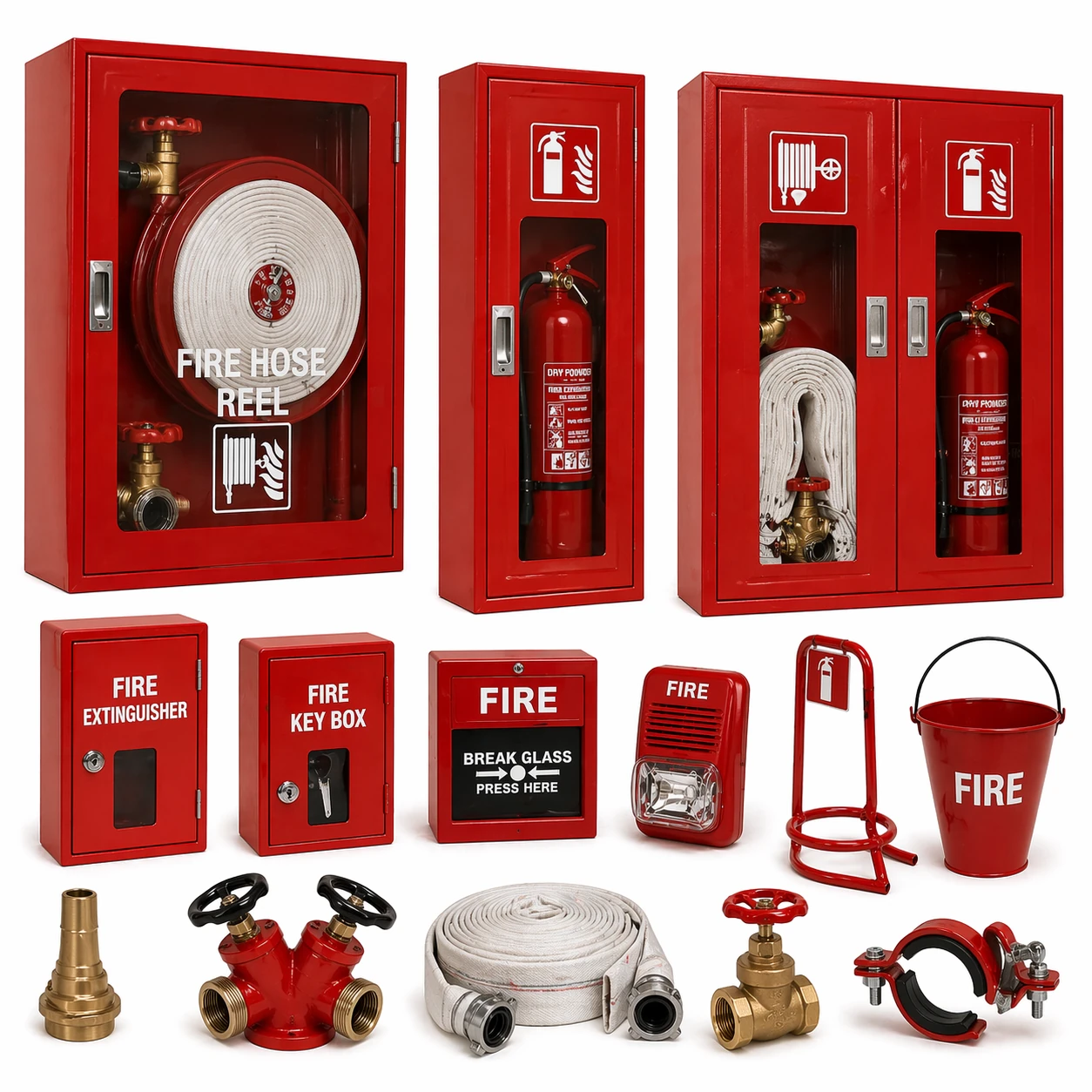
Build the cabinet finish-approval matrix
For a fire-cabinet approval, align the enclosure dimensions, finish sample, hardware schedule, and quotation before authorizing the build.
- Supplier has verified capability to produce the specified cabinet finish (color, texture, gloss level, and coating system). A signed finish-capability statement listing the exact coating process, equipment, and past production of similar finishes. Supplier quality or production manager Non-conforming finish leads to rework, project delay, and possible rejection by the fire marshal or owner. Request the capability statement with the RFQ response; verify against the finish specification sheet.
- Supplier maintains a documented quality-control checkpoint for finish adhesion, thickness, and color consistency on every cabinet run. In-process QC checklist or inspection report from the last three production lots of similar cabinets. Supplier QC department Without documented QC, finish defects may pass through to installation, causing field rejection and replacement cost. Ask for the QC checklist template and a sample report before approving the supplier for production.
- Supplier has a defined approval gate for finish samples before bulk production begins. A written sample-approval protocol that includes color measurement, gloss reading, and a signed-off physical sample. Supplier production planner or quality manager Missing a formal sample gate allows the supplier to start bulk without buyer sign-off, risking a full lot rejection. Require the sample-approval protocol as a contract exhibit; hold the first article before production release.
- Supplier has a process to manage finish exceptions (custom color, non-standard texture, or field-requested change) without disrupting the schedule. An exception-handling form or change-order log showing how past finish deviations were documented, approved, and tracked. Supplier project manager or customer service lead Uncontrolled exceptions can cascade into mismatched panels, rework, and missed delivery dates. Review the exception log from the last three projects; confirm the approval chain for any finish change.
Compare options and record open assumptions
Before you lock the finish specification, list every assumption you are making about the cabinet material, coating system, color, gloss, and texture. Compare each assumption against the supplier's stated capability and past production records. Any mismatch becomes a risk item that must be resolved before the sample stage.
Name the owner and status of every exception
For each finish exception—custom color, non-standard texture, or field-requested change—assign a single owner (buyer or supplier) and a clear status: open, in review, approved, or rejected. This prevents miscommunication and ensures that every deviation has a documented approval path before it reaches the production floor.
Request supplier evidence without assuming capability
For fire cabinet material finish specification, the steps below turn request supplier evidence without assuming capability into supplier proof: sample ownership, QC records, lead-time logic, and change-control responsibility.
Sample, document, and production-record requests
A buyer who assumes a supplier’s finish capability based on a brochure risks receiving cabinets that fail corrosion or adhesion tests. The concrete failure mode is a mismatch between claimed and actual coating performance, which can lead to early rust or delamination. The control is a structured evidence request that covers three layers: sample, document, and production record.
For the sample layer, request a physical finish coupon from the current production batch, not a pre-prepared showpiece. The document layer requires a certified mill certificate for the steel substrate and a coating manufacturer’s data sheet for the powder or liquid finish. The production-record layer demands a log of the last three batch runs, including cure oven temperature profiles and film thickness readings. This three-tier approach forces the supplier to demonstrate consistent execution rather than one-off capability.
During RFQ handoff, specify that the sample must be cut from the same coil stock as the cabinet body and that all documents must be dated within 30 days of the quote. This prevents the supplier from recycling old evidence. If the supplier hesitates or offers only a single sample without supporting records, flag it as a production risk. The cost impact of skipping this step is a full cabinet replacement and site rework, which far exceeds the price of a proper evidence review.
Review about us before finalizing supplier questions and proof requests.
Review quote or sample evidence before approval
For catalog products, this section connects review quote or sample evidence before approval with artwork files, material choice, finish proof, sample sign-off, and production repeatability.
Acceptance points and unresolved risks
At this stage, the buyer must have a confirmed finish specification (coating type, gloss range, and substrate preparation) from the supplier’s quote and a physical or digital sample that matches the written spec. The record needed before the next stage is a signed-off evidence pack comprising the spec sheet, the approved sample, and the quoted price.
- Compare the quoted coating type (e.g., polyester powder-coat) against the sample’s visible texture and color. Ask: Does the sample’s gloss level fall within the range stated in the quote request?
- Verify substrate preparation: request a cross-hatch adhesion test result or a photo of the sample edge showing no rust or bare metal. Unresolved risk: if the supplier cannot provide this, the finish may fail in humid environments.
- Check the sample for orange peel, pinholes, or uneven coverage. Use an appropriate inspection magnification if possible. Any defect means the production run may require rework.
- Confirm the quote includes a finish warranty (e.g., 1 year against peeling or fading). If not, note this as an unresolved risk before bulk order.
Before approving, ask the supplier: “Can you confirm the sample was produced using the same powder batch and line settings as the quoted production?” If the answer is no, request a physical sample made from the intended production material.
| Checkpoint | Buyer verification question |
|---|---|
| Coating type | Is the powder-coat type (e.g., epoxy-polyester) explicitly stated in the quote? |
| Gloss range | Does the sample match the 60-degree gloss meter reading within ±the quoted quantity? |
| Substrate prep | Is the sample free of rust spots after a 24-hour salt spray test (if specified)? |
| Warranty | Does the quote include a finish durability warranty? |
If any of these checks fail, do not proceed to bulk production. Instead, request a revised sample or a written corrective action plan from the factory.
Freeze changes for bulk production or repeat orders
For fire cabinet material finish specification, this section connects freeze changes for bulk production or repeat orders with artwork files, material choice, finish proof, sample sign-off, and production repeatability.
Version, sample, SKU, and packing change control
When a buyer approves a fire cabinet finish sample but later requests a different powder coat texture or color code without updating the specification document, the factory may proceed with the old spec if the change is not formally frozen. This ambiguity leads to rejected batches, rework costs, and delayed delivery. To prevent this, implement a change control process that locks the version, sample reference, SKU, and packing details before any bulk production or repeat order is released.
During quote request and sample handoff, require the supplier to confirm the exact finish specification—including RAL number, gloss level, and surface texture—against a signed sample. Any deviation must trigger a new version approval cycle. For repeat orders, verify that the SKU and packing instructions match the last approved sample; otherwise, production risk increases due to undocumented changes in material or packaging.
- Version freeze: Lock spec document revision before PO; Factory uses outdated finish
- Sample sign-off: Obtain written approval on physical sample; Color/texture mismatch
- SKU verification: Match SKU to approved spec; Wrong material or finish
- Packing confirmation: Confirm packing list matches order; Damage or incorrect labeling
By freezing changes at these points, the buyer ensures factory execution aligns with the approved specification, reducing rework and cost overruns. This approach also simplifies quote request and sample handoff for future orders, as the baseline is clear and documented.
Prepare a comparable RFQ and handoff record
At this stage, the buyer must have a confirmed finish specification (coating type, gloss range, and substrate gauge) before sending the quote request to suppliers. The record needed before the next stage is a completed quote request document that includes the buyer’s verified requirements and a handoff record for sample approval.
Buyer inputs to send to the supplier
- Confirm the coating type (e.g., powder-coat, epoxy, or polyester) and the required gloss level (e.g., matte, semi-gloss, or gloss). Ask the supplier to state their standard gloss range and tolerance.
- Specify the substrate material and gauge. Instead of an exact thickness, ask: “What is your standard gauge for products bodies, and how does it meet the required fire rating?”
- Define the corrosion resistance requirement. For example: “The finish must pass a neutral salt spray test per applicable market compliance evidence for a duration agreed upon between buyer and supplier.”
- Request a finish sample or color chip that matches the specified gloss and texture. The supplier should provide a physical sample for approval before production.
- Include a checklist for the handoff record: coating type, gloss level, substrate gauge, corrosion test standard, and sample approval date. Both parties sign the record.
Use the table below to compare supplier responses against your quote request requirements. Fill in each row with the supplier’s stated values and your verification notes.
- Coating type: ;
- Gloss level: ;
- Substrate gauge: ;
- Corrosion test standard: ;
- Sample approval date: ;
After completing the table, attach the signed handoff record to the quote request and file it for future reference. This ensures both parties agree on the finish specification before production begins.
For prepare a comparable quote request and handoff record, record the approval risk if the evidence does not match the approved requirement before the buyer signs the approval record.
Buyer questions about fire cabinet material finish specification
When a buyer fails to specify the exact material finish—such as powder-coat gloss level, texture, or corrosion resistance—the supplier may default to a low-cost, non-compliant finish that fails inspection or corrodes prematurely. The control is a written finish specification that includes a test method (e.g., applicable market compliance evidence salt spray for 500 hours) and a physical sample approval step before production.
What must be confirmed before quotation?
Before requesting a quote, confirm the finish standard (e.g., UTD DGCS 10-44-00 or Section 10 44 13), the substrate material (e.g., 18-gauge steel), and the coating system (e.g., polyester powder coat, minimum 60 μm thickness). Also define acceptance criteria: no orange peel, no runs, and color tolerance within buyer-approved color tolerance. Without these, the supplier’s price is meaningless.
What evidence belongs in sample approval?
Sample approval must include a signed certificate of conformance, a 3”x5” coated panel from the same production batch, and a salt spray test report from an accredited lab. The panel must be marked with the batch number and date. Reject samples that lack traceability or test data—they indicate weak factory execution.
Conclusion and next procurement action
Verify that your final material finish specification—including exact coating type, gloss level, and thickness tolerance—is documented in the quote request and that each supplier’s response is compared against that baseline. Check the quoted MOQ against your project volume, confirm the lead time aligns with your installation schedule, and request a sample certificate of conformance with a coated panel to validate finish consistency before production.
Document the approval risk if the supplier cannot provide a signed conformance certificate or a 3”x5” coated sample, and shortlist only those who meet the finish standard. Once the comparison is complete, sign the handoff record to freeze the specification and move to sample approval, ensuring all QC proof requirements are attached before releasing the order.
Fire cabinet material finish specification FAQ
What should a buyer confirm for fire cabinet material finish specification?
The buyer should confirm the exact coating type (e.g., powder-coat gloss level), substrate gauge, and the applicable finish standard (such as UTD DGCS 10-44-00 or equivalent project specification). Document these parameters in the quote request so the supplier can provide a cost and lead-time estimate based on the confirmed finish requirements. Ask how QC will check the sample, color, finish, packing, and bulk order. Approving the wrong structure or supplier proof can create quality, cost, or delivery problems.
What evidence should a supplier provide for fire cabinet material finish specification?
The supplier should provide a signed certificate of conformance, a 3”x5” coated sample panel, and a written statement that the finish meets the specified standard. Before approving, compare the sample panel against the specification and request a signed conformance certificate if not initially supplied. Signing off an unverified structure or proof file can create quality, cost, or delivery problems. Ask for a sample, specification confirmation, or QC evidence before approval.
How should changes be recorded before production or reorder?
Any change to the material finish—such as a different coating type, gloss level, or substrate gauge—must be documented in a revised specification sheet and approved in writing by both parties. For bulk production or reorder, include the updated specification in the purchase order and request a new sample panel for verification before production begins. Approving a structure or supplier proof that does not match the spec creates quality, cost, or delivery problems.
So when people saying solid wood cabinets, where exactly is solid wood for the cabinets?
For fire cabinets, “solid wood” typically refers to the cabinet frame or trim, not the entire structure; the cabinet body is usually steel with a powder-coat or painted finish. Confirm with the supplier exactly which components are solid wood and which are engineered wood or metal, and document this in the material finish specification. Ask how QC will check the sample, color, finish, packing, and bulk order. Accepting an unverified structure or proof record creates quality, cost, or delivery problems. put the locked requirement into the quote request or sample approval notes.
What should buyers verify before approving fire cabinet material finish specification?
Before approving the material finish specification, verify that the coating type, gloss level, substrate gauge, and finish standard are clearly stated and match the project requirements. Request a sample panel and a signed conformance certificate, and compare the sample against the specification to confirm color, texture, and adhesion. An unapproved structure or proof file can create quality, cost, or delivery problems.
quote request handoff: Send Specs for Review.
Source check: SECTION 104413 – FIRE PROTECTION CABINETS; UTD DGCS 10-44-00 Fire Extinguishers Cabinets and .; Section 10 44 13 – Fire Protection Cabinets.