Coupling quotes diverge on the things buyers leave out of the enquiry: the connection standard, the thread or lug form, the body alloy, and the gasket compound. Suppliers fill those gaps with their own defaults, and the cheapest quote is usually the one that assumed the least.
This checklist covers what actually moves the price on couplings — connection type, material, quantity break — and the costs that only appear after the quotation.
Direct answer: Name the connection standard, thread or lug form, nominal size, body material, and gasket compound in the enquiry itself. Without those five, coupling quotes are not comparable no matter how they are laid out.
Quick Price Range
| Cost driver | What changes it | Quote signal | Risk to avoid | Buyer action |
|---|---|---|---|---|
| Coupling alloy and thread type | Grade, plating, and standard (NST, NPT, NH) | Price per unit varies with certificate and finish | Mismatched thread causes field rejection and reorder cost | Document exact alloy grade, thread standard, and size on RFQ |
| Order quantity (MOQ) | Product configuration and mixed‑order structure | Min 200 pcs for standard products; 2000 pcs for sprinklers | Under‑ordering triggers partial shipment or higher unit cost | Confirm MOQ by model and negotiate mixed container if needed |
| Lead time | Spec confirmation, certification, and packaging | Sample 15–20 days after spec approval; production 35–60 days | Late delivery disrupts project schedule and penalty clauses | Agree on production milestones before PO issuance |
| Specification details (alloy, pressure, thread) | Grade, plating, and compliance standard (CE, CCC) | Supplier provides spec sheet and certificate on demand | Incomplete spec leads to wrong coupling and field failure | Cross‑check spec against sample and approved drawing before production |
| Post‑quote follow‑up | Supplier response time and sample approval schedule | Written confirmation of spec and lead time provided | Delayed follow‑up extends timeline and increases risk of rework | Set a 5‑day review window for quote, then request sample when building commercial fire protection solutions |
For coupling alloy and thread type, a poor decision can mean mismatched thread causes field rejection and reorder cost. Request written proof and compare it with the approved sample or specification.
For fire hose coupling, preserve the coupling alloy and thread type decision under one revision number: keep the supplier response, marked sample, approved specification, quotation, and approval owner together. If the evidence conflicts with the approved record, hold the quote, sample, or production release until the deviation is explained in writing. Once the buyer and designated technical authority have accepted the evidence, carry the signed Quick Price Range record into the purchase order, production handoff, shipment release, and later reorder review so every team works from the same baseline.
For fire hose coupling, build the RFQ around Alloy grade, thread standard, and quantity tier. Match every listed buyer input to written supplier confirmation, approval evidence, and the risk that would hold the quote.
- Alloy grade, thread standard, and quantity tier: Cost drivers like alloy and thread standard are key for building commercial fire protection solutions. NST vs. NH thread; 6061 vs. 6063 alloy. Quote may be based on wrong spec, causing rework or rejection. Specify exact alloy and thread standard in RFQ.
- Minimum order quantity per product configuration: MOQ impacts pricing tier and feasibility of small orders. Baseline MOQ 200 pcs for standard couplings; confirm by model. Order below MOQ may incur premium or be declined. Verify minimum order with supplier for each coupling type before quoting.
- Sample lead time and production lead time after confirmation: Impacts project schedule and delivery planning. Sample 15–20 days; production 35–60 days after spec approval. Delayed approval may push delivery past project deadline. Confirm lead time with supplier and plan approval milestones.
- Required approvals: spec, sample, certification, packaging: Each approval gate prevents mismatches before bulk order. Approve sample against thread gauge and pressure test. Unapproved sample may lead to non-conforming bulk shipment. Document each approval step and share timeline with supplier.
- Complete coupling spec: alloy, thread, pressure rating, coating: Incomplete specs cause incorrect quotes and production errors. Include thread standard (NST/NH), pressure class, and finish. Supplier may default to standard specs that differ from need. Attach a detailed spec sheet to the quote request; request confirmation.
Key Cost Factors
For building commercial fire protection solutions, use Key Cost Factors as one quote request checkpoint. Each row should identify the requirement, approval evidence, and buyer action before production.
| Requirement | Factory control | Evidence to verify | Order risk | RFQ follow-up |
|---|---|---|---|---|
| Sample approval | Factory pre-shipment sample matched against approved spec and thread gauge | Visual check, dimensional measurement, and functional coupling test on submitted sample | Mismatched thread or material leads to field rejection and replacement cost | Request written sample approval report before production release |
| Material / substrate | Incoming raw material certificate verified against alloy or brass composition spec | Review mill test report or spectro analysis for each production batch | Subgrade material causes premature corrosion or thread galling in service | Ask supplier to attach material cert with each quotation |
| Width or size tolerance | Dimensional inspection using calibrated go/no-go gauge at coupling diameter and thread pitch | Measure three random pieces per lot; record deviation from nominal | Oversize or undersize coupling fails to mate with existing hose or adapter | Specify acceptable tolerance range in RFQ and confirm gauge standard |
| Finish or color control | Visual standard sample retained; production pieces compared under consistent lighting | Check for pitting, discoloration, or coating defects on a sample of pieces | Inconsistent finish signals poor plating process and potential early rust | Approve finish master sample and include rejection criteria in PO |
| Packing format | Factory packing list matches quantity, bundle count, and labeling per instruction | Inspect outer carton condition and inner unit arrangement at loading | Improper packing causes thread damage during transit and costly returns | Confirm packing specification and mark cartons with lot number and about us reference |
Read the rows as one approval sequence for this fire hose coupling order. Start with sample approval; use the risk and buyer-action columns to decide whether its evidence is sufficient. Verify it with the inspection method and approval evidence recorded in the table.
Keep the supplier response, marked sample, and approval owner for fire hose coupling under the same revision number. If any proof conflicts with the approved record, hold the quote, sample, or production release until the supplier explains the deviation in writing. Before closing the checkpoint, reconcile the latest drawing, sample, quotation, and approval comments, identify which record controls if they disagree, and document the resolution. Carry the signed Key Cost Factors table into the purchase order and production handoff so the same checks support quote comparison, sample approval, shipment release, and later reorders.
MOQ and Volume Pricing
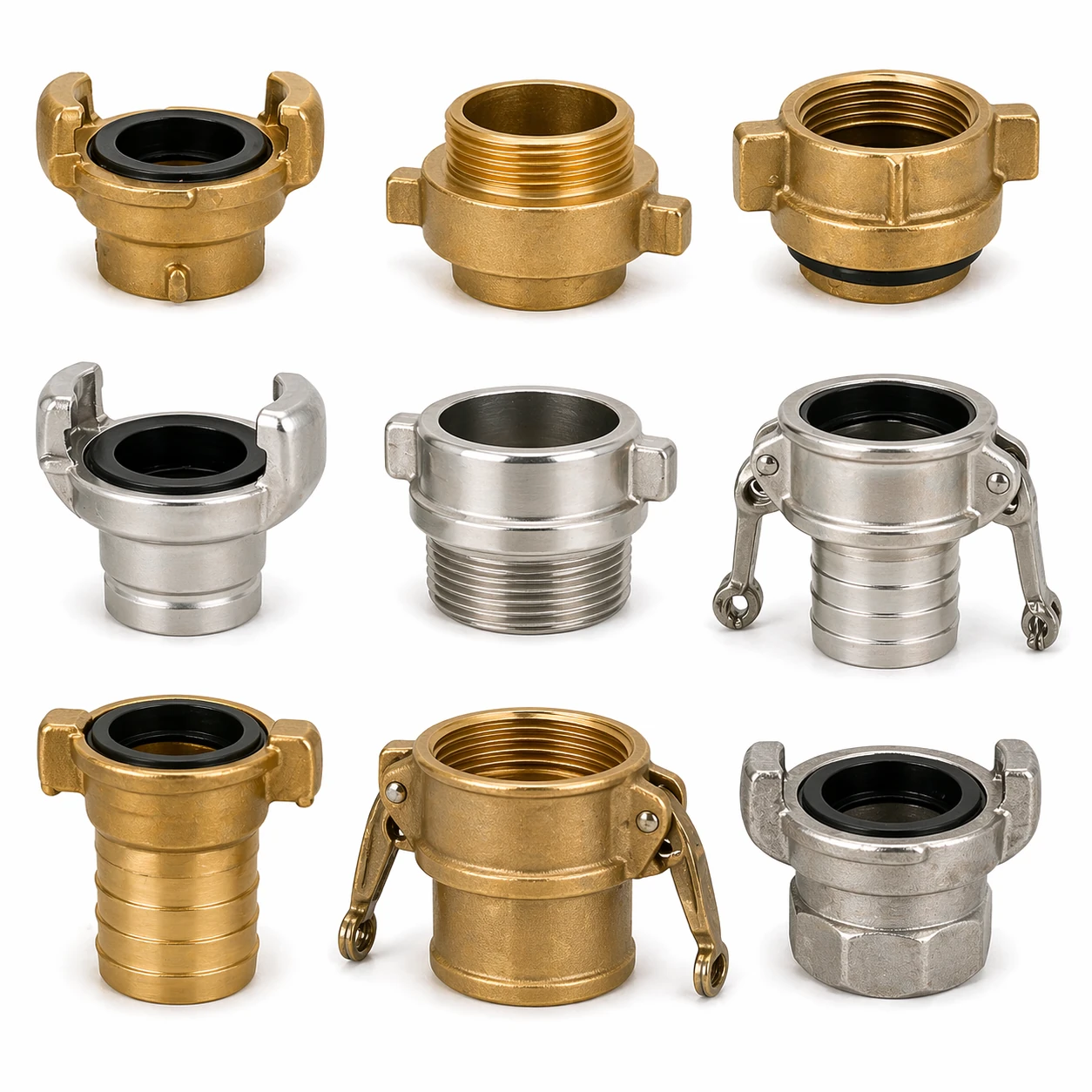
in fire hose coupling: match the coupling thread, seal arrangement, ordered quantity, lead-time record, and packed set to the buyer-approved connection schedule.
- Supplier cannot document a minimum order quantity for fire hose couplings. Without a stated minimum order, the supplier may reject small trial orders or force over-ordering, increasing inventory risk. Request the supplier's baseline minimum order per coupling model and thread standard, and confirm if mixed orders are allowed. A written minimum order schedule or quotation line item specifying minimum quantity per product configuration. Compare the minimum order against your initial order volume and adjust the quote request or shortlist accordingly.
- Volume pricing is only provided after a sample is approved, not upfront. Delaying price disclosure hides cost escalations for tooling, setup, or certification that may surface later. Ask for a volume price range or price-break table before committing to sample production. A price-break schedule showing unit cost at 200, 500, 1,000, and the quoted quantity. Document the price range in the quote request approval record and verify it against your budget.
- Supplier cannot confirm lead time for standard production after minimum order is met. Unclear lead time can delay project schedules and cause emergency sourcing costs. Request a production lead time estimate that includes specification confirmation, material procurement, and QC. A written lead-time commitment, typically 35–60 days after order confirmation, per brand context. Include the lead time in the purchase order terms and set a delivery milestone for follow-up.
- No evidence of quality control checks for coupling thread fit or pressure rating at the factory. Thread mismatch or pressure failure can cause coupling leaks or disconnections in the field, risking safety. Ask the supplier to describe their QC process for thread gauge testing and hydrostatic pressure checks. A QC checklist or test report for the specific coupling model, or a sample inspection record. Shortlist only suppliers who provide a written QC procedure and agree to third-party inspection on first order.
Hidden Costs to Check
When a fire hose coupling specification is unclear or the quote basis lacks detail, commercial consequences can escalate quickly. A vague requirement may lead to unexpected material surcharges, rework charges, or delayed delivery—costs that are not always visible in the initial price.
Material and specification cost drivers
Specifying the exact alloy grade, thread standard, and pressure rating is critical. Without a clear quote request, suppliers may default to a higher-cost material or add a surcharge for non-standard specs. Ask your supplier to confirm the material grade and thread type in writing before quoting.
Customization, setup, and MOQ impact
Custom threads, special coatings, or unique packaging can trigger setup fees and higher minimum order quantities. Verify with your supplier whether the quoted price includes tooling or mold charges, and request a breakdown of any non-recurring engineering costs.
Hidden risks in quotes and delivery
Some quotes exclude sampling, testing, or shipping insurance. To avoid surprises, ask your supplier to itemize all potential add-ons—such as third-party inspection, certification documentation, or expedited shipping—and confirm the delivery terms (Incoterms) in the quote request.
- Material grade: Is the quoted price based on the exact alloy and thread standard specified?
- Setup/tooling: Are there any non-recurring engineering or mold charges included?
- Sampling: Does the quote include sample cost, shipping, and any testing fees?
- Delivery: What Incoterms are applied, and are insurance and customs duties covered?
For more on fire hose coupling sourcing, see our about us page.
How to Get an Accurate Quote
For a hose-coupling quote, read the thread or lug dimensions, the assembled connection sample, and the price breakdown together; a low unit price cannot correct an incompatible joint.
- Can you produce fire hose couplings in the specified thread standard and alloy grade? Confirms the supplier has the tooling and material sourcing to match your exact connection type, avoiding field mismatches. Supplier lists the exact thread standard (e.g., NH, NST) and alloy grade (e.g., 6061-T6 aluminum) in their capability statement. Mismatched threads or subgrade alloys cause leaks, coupling failure, or rejected fire system inspections. Request a written capability sheet or sample approval before shortlisting.
- What verification method do you use to confirm coupling pressure rating and thread fit? Ensures the supplier has a repeatable QC process, not just a visual check, to guarantee rated performance. Supplier describes a documented hydrostatic pressure test and thread-gauge check on every production lot. Without verified testing, couplings may fail under rated pressure, causing system downtime or safety hazards. Ask for a sample test report or witness a production lot test during the quote request stage.
- What approval risk exists if the coupling specification deviates from the original quote request? Reveals whether the supplier will flag spec changes before production, preventing costly rework or rejected shipments. Supplier requires written approval for any deviation and provides a clear change-order process with lead-time impact. Unapproved deviations can void certifications, delay project approvals, or cause non-compliance with local fire codes. Document the approval process in the quote request terms and confirm it during the purchase order stage.
- How do you handle buyer follow-up if the coupling sample fails the first fit test? Tests the supplier's responsiveness and willingness to correct issues before bulk production, saving time and cost. Supplier offers a documented corrective action plan with a revised sample timeline and no additional tooling charge for the fix. A slow or uncooperative supplier can delay your entire project schedule and increase procurement costs. Include a sample-approval clause in the quote request that specifies the corrective action timeline and cost responsibility.
See https://minwenfire.com/products/catalog/ for how to get an accurate quote.
Source check: ISO 9001 quality management systems; NFPA codes and standards; Top 10 Questions to Ask Your Fire Equipment Supplier Before Ord….
In conclusion
The final approval of a fire hose coupling connection quote request comes down to verifying that every specification, cost factor, and quality risk has been documented and compared against supplier proof. By checking thread standards, alloy grades, minimum order thresholds, and lead-time math before committing, you reduce the chance of field mismatches and budget overruns. Shortlist a supplier that can validate the spec with a sample, then approve that sample before moving to production. This structured handoff from quote request to sample approval is what separates a smooth procurement from a costly rework.
To shortlist a supplier, visit products and confirm the final specification, quote assumptions, sample approval, QC evidence, approval risk, and supplier follow-up before bulk order.
Frequently Asked Questions
What should buyers confirm before ordering Fire Hose Coupling Connection Rfq Checklist?
Before ordering, confirm the exact alloy grade, thread standard (e.g., NST or NH), and pressure rating to avoid mismatches. Check the supplier’s minimum order for standard couplings—typically a baseline per product—and verify whether custom threads or coatings add setup fees. Request a sample to test dimensional fit and pressure integrity, and document all certification requirements (CCC, CE, or UL test reports) in the quote request. Confirm production lead time after specifications and sample approval are fixed.
How should buyers compare MOQ, lead time, and quote terms?
Compare minimum order by product configuration: standard fire protection items often have a baseline minimum order, while sprinklers may require a higher minimum. Lead time for standard production typically ranges from 35 to 60 days after specifications and packaging are confirmed. Ask the supplier to break out sampling costs, setup fees, and shipping insurance in the quote, and verify whether volume discounts apply at your target quantity. Ask how QC will check the sample, color, finish, packing, and bulk order.
What sample, quality, or supplier checks reduce risk?
Reduce risk by ordering a sample (15–20 days after spec confirmation) and testing it for thread compatibility, pressure rating, and coating durability. Verify the supplier’s ISO 9001 quality management system and request applicable certification documents (CCC, CE, or UL test reports) on demand. For production, confirm that the factory can meet your lead time and that the QC process includes dimensional checks and pressure testing before shipment. Confirm minimum order and order quantity by color, width, artwork, and packing route. Separate material, setup, packing, freight, and reorder cost drivers in the quote request.
quote request handoff: Send Specs for Review.